What Are the Common Lengths Available for Steel Channels?
On a construction site, a project manager reviews a delivery of steel channels. The truck has arrived with bundles of 6-meter lengths, but the project's design drawings specify 5.8-meter beams for a mezzanine support. The project manager now faces a choice: accept the standard lengths and cut them on-site, or return the shipment and wait for custom-cut material. This scenario is common in the steel industry, where the length of the steel channel is not a trivial detail but a factor that affects logistics, cost, and project timelines. A Steel Channel is a hot-rolled or cold-formed structural section with a U-shaped or C-shaped cross-section. It is used in construction, manufacturing, and infrastructure for framing, supports, and bracing. The length of the channel is a critical specification that is often overlooked until the material arrives on site.
The question of what lengths are commonly available for steel channels is answered by a combination of industry standards, manufacturing capabilities, and transportation constraints. The most common length is 6 meters, which is the standard mill length for hot-rolled steel channels in many regions. However, other lengths are available, including 9 meters, 12 meters, and custom cut-to-size lengths. The choice of length depends on the application, the transportation method, and the fabricator's capabilities. This article provides a comprehensive technical reference for the common lengths available for steel channels, including standard mill lengths, custom options, and the factors that influence length selection. We will also provide specifications and ordering guidance from our factory at Tianjin Shunchen Hongye Enterprise Management Co., Ltd.
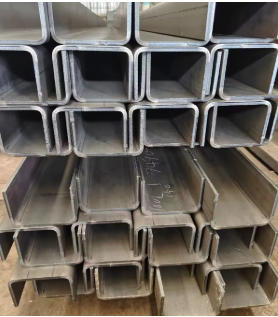
Table of Contents
- 1. The 6-Meter Standard: Why This Length Dominates the Industry
- 2. Beyond 6 Meters: When Longer Lengths Make Sense
- 3. Cut-to-Size: When Standard Lengths Don't Fit
- 4. The Transportation Constraint: What Fits on a Truck?
- 5. How Length Affects Cost, Waste, and Project Scheduling
- 6. Steel Channel Specifications and Ordering Guide
- 7. Frequently Asked Questions (FAQ)
- 8. Conclusion
1. The 6-Meter Standard: Why This Length Dominates the Industry
If you walk into any steel service center or fabricator's yard, the most common length of Steel Channel you will see is 6 meters. This is not an arbitrary choice. The 6-meter length is the standard mill length for hot-rolled steel channels in many parts of the world, including China, Europe, and other major steel-producing regions. The reason for this standard is a combination of manufacturing efficiency and transportation logistics. Steel mills produce channels in long runs, and the 6-meter length is a convenient size for handling, stacking, and shipping. It is short enough to be transported on standard flatbed trucks without special permits, and long enough to be efficient for most construction and fabrication applications.
The 6-meter length is also convenient for designers and fabricators. Many structural designs are based on modules that divide evenly into 6 meters. For example, a beam that spans 3 meters can be cut from a 6-meter channel with no waste. A column that is 2 meters tall can be cut from a 6-meter length with a 2-meter remnant that can be used for another purpose. This modularity reduces waste and simplifies material planning. The table below shows the common standard lengths for steel channels in different regions.
| Region | Standard Mill Length | Other Common Lengths | Notes |
| China | 6 meters | 9 meters, 12 meters | 6m is the most common; 12m is available for large orders |
| Europe | 6 meters | 12 meters, 15 meters | 6m is standard; longer lengths available on request |
| North America | 20 feet (6.1 meters) | 40 feet (12.2 meters) | Lengths are typically specified in feet |
| Japan | 6 meters | 9 meters, 12 meters | Similar to Chinese standards |
| Middle East | 6 meters | 12 meters | Imported material often follows European or Chinese standards |
At Tianjin Shunchen Hongye Enterprise Management Co., Ltd., our factory maintains a large inventory of 6-meter Steel Channel in a range of sizes and specifications. We also supply 9-meter and 12-meter lengths for projects that require longer spans. Our goal is to provide our customers with the material they need, in the length they need, when they need it.
2. Beyond 6 Meters: When Longer Lengths Make Sense
While 6 meters is the standard, there are many applications where longer Steel Channel lengths are preferred. Longer lengths reduce the number of splices and connections required, which can improve structural integrity and reduce labor costs. For example, a long-span roof purlin or a bridge girder may be designed as a single continuous piece, rather than multiple pieces joined together. In these cases, a 9-meter or 12-meter channel is more efficient than a 6-meter channel. Longer lengths also reduce the number of cuts required, which can save time and reduce waste. However, longer lengths are not always practical. They are more difficult to handle, require larger cranes or forklifts, and may be subject to transportation restrictions.
The decision to use longer lengths is typically driven by the project's design requirements. If the design specifies a continuous member, the fabricator will order the longest length available that can be transported to the site. If the design allows for splices, the fabricator may choose to use standard 6-meter lengths and splice them together. The table below summarizes the advantages and disadvantages of different channel lengths.
| Length | Advantages | Disadvantages | Typical Applications |
| 6 meters | Easy to handle, standard transport, low cost | Requires splicing for longer spans | General construction, framing, supports |
| 9 meters | Fewer splices, good for medium spans | Requires special handling, longer transport | Roof purlins, mezzanine floors |
| 12 meters | Fewer splices, good for long spans | Difficult to handle, transport restrictions | Bridge girders, large industrial structures |
| Custom cut-to-size | Minimal waste, exact fit | Higher cost per unit, longer lead time | Precision fabrication, special projects |
At our factory, we can supply Steel Channel in 9-meter and 12-meter lengths for projects that require longer members. We also offer custom cut-to-size services for customers who need specific lengths that are not standard. Our team can help you determine the optimal length for your project, balancing the need for fewer splices against the practical constraints of handling and transportation.
3. Cut-to-Size: When Standard Lengths Don't Fit
There are many situations where standard lengths do not meet the project's requirements. A fabricator may need a channel that is 5.8 meters long, not 6 meters. A contractor may need a channel that is 7.2 meters long, not 9 meters. In these cases, cut-to-size Steel Channel is the solution. Cut-to-size means that the steel service center or fabricator cuts the channel to the exact length specified by the customer. This eliminates waste and ensures that the material fits the application perfectly. Cut-to-size is particularly common in precision fabrication, where even a few millimeters of difference can affect the fit and function of the final assembly.
The cut-to-size process is straightforward. The customer provides the required length, and the supplier cuts the channel using a band saw, a circular saw, or a plasma cutter. The cut end is typically deburred and may be painted or coated to prevent corrosion. The table below summarizes the cut-to-size capabilities of our factory.
| Parameter | Specification | Notes |
| Minimum Cut Length | 300 mm | Shorter lengths may be possible with special handling |
| Maximum Cut Length | 12,000 mm | Limited by the length of the raw material |
| Cut Tolerance | +/- 2 mm | Tighter tolerances available on request |
| Cut Method | Band saw, circular saw, plasma | Selected based on material thickness and quantity |
| Edge Treatment | Deburred, chamfered, or painted | Optional; prevents corrosion and injury |
| Lead Time | 1-3 days | Depends on quantity and complexity |
At Tianjin Shunchen Hongye Enterprise Management Co., Ltd., we offer cut-to-size services for all our Steel Channel products. Our factory is equipped with modern cutting equipment and experienced operators. We can cut channels to any length within the specified range, and we can deburr or treat the cut ends as required. Our goal is to provide our customers with material that is ready to use, eliminating the need for on-site cutting and reducing waste.
4. The Transportation Constraint: What Fits on a Truck?
The length of a Steel Channel is not just a design decision; it is a transportation decision. The material must be transported from the steel mill or service center to the fabrication shop or construction site. The mode of transportation determines the maximum length that can be shipped economically. For standard flatbed trucks, the maximum length is typically 12 meters for a 40-foot trailer, or 13.6 meters for a 45-foot trailer. For specialized extendable trailers, longer lengths can be accommodated, but at a higher cost. For rail transport, the maximum length is typically 12 meters to 18 meters, depending on the rail car. For shipping containers, the maximum length is limited by the container size: 5.9 meters for a 20-foot container, and 12.0 meters for a 40-foot container. The table below summarizes the transportation constraints for different modes.
| Transportation Mode | Maximum Length | Notes |
| Flatbed Truck (20 ft) | 6.1 meters | Standard for local deliveries |
| Flatbed Truck (40 ft) | 12.2 meters | Most common for intercity transport |
| Flatbed Truck (45 ft) | 13.6 meters | Requires special permits in some regions |
| Extendable Trailer | Up to 25 meters | Used for very long members; high cost |
| Rail Car | 12 - 18 meters | Cost-effective for large quantities |
| 20-ft Container | 5.9 meters | For export shipments |
| 40-ft Container | 12.0 meters | Most common for export shipments |
At our factory, we consider the transportation constraints when advising our customers on the optimal length for their project. If a customer needs a length that exceeds the standard truck limit, we can arrange for specialized transport or recommend that the channel be cut into shorter lengths and spliced on site. Our goal is to provide a solution that is both technically sound and economically efficient. We work with a network of logistics partners to ensure that our Steel Channel products are delivered safely and on time, regardless of the length required.
5. How Length Affects Cost, Waste, and Project Scheduling
The choice of Steel Channel length has a direct impact on the project's cost, waste, and schedule. A longer length may cost more per unit, but it may reduce the number of splices required, which can save on labor and connection materials. A shorter length may be cheaper per unit, but it may result in more waste if the required length does not divide evenly into the standard length. The optimal length is the one that balances these factors to minimize the total cost of the project. The table below provides a comparison of the cost and waste implications of different length strategies.
| Strategy | Material Cost | Labor Cost | Waste | Scheduling Impact |
| Standard 6m lengths | Low | Moderate (more splices) | Moderate | Short lead time, easy to source |
| Longer 12m lengths | Medium | Low (fewer splices) | Low | Longer lead time, special transport |
| Cut-to-size | High (per unit) | Low (no on-site cutting) | Very Low | Requires accurate planning |
At our factory, we help our customers optimize their Steel Channel length strategy. We can provide a detailed analysis of the cost and waste implications of different length options, and we can recommend the strategy that best meets the project's objectives. Whether the priority is minimizing material cost, reducing labor, or meeting a tight schedule, we have the expertise to help.
6. Steel Channel Specifications and Ordering Guide
The following table provides a summary of the standard Steel Channel sizes and lengths available from our factory. This table is intended as a quick reference for engineers and procurement specialists who need to specify Steel Channel for their projects.
| Channel Size (Height x Width x Web) | Standard Lengths | Cut-to-Size Available | Typical Applications |
| 50 x 25 x 3 mm | 6m, 9m, 12m | Yes | Light framing, supports |
| 75 x 40 x 4 mm | 6m, 9m, 12m | Yes | General construction |
| 100 x 50 x 5 mm | 6m, 9m, 12m | Yes | Structural framing, mezzanines |
| 150 x 75 x 6 mm | 6m, 9m, 12m | Yes | Heavy framing, bridge supports |
| 200 x 80 x 7 mm | 6m, 9m, 12m | Yes | Industrial structures |
| 300 x 100 x 9 mm | 6m, 12m | Yes | Heavy industrial, infrastructure |
At Tianjin Shunchen Hongye Enterprise Management Co., Ltd., we maintain a large inventory of Steel Channel in standard lengths and can supply cut-to-size material on request. Our factory is equipped with modern cutting and processing equipment, and our team has the expertise to help you select the right channel for your application. We also provide a range of surface treatments, including hot-dip galvanizing and painting, to protect the channel from corrosion.
7. Frequently Asked Questions (FAQ)
Question 1: What is the most common length for steel channels?
Answer: The most common length for steel channels is 6 meters. This is the standard mill length in many regions, including China and Europe. It is widely available, easy to transport, and suitable for a wide range of applications. Other common lengths include 9 meters and 12 meters, which are used for projects that require longer spans or fewer splices.
Question 2: Can steel channels be cut to a specific length?
Answer: Yes, steel channels can be cut to a specific length. This is known as cut-to-size service. The customer specifies the required length, and the supplier cuts the channel to that length using a band saw, circular saw, or plasma cutter. Cut-to-size eliminates waste and ensures a perfect fit for the application. At our factory, we offer cut-to-size services for all our steel channel products.
Question 3: What is the maximum length of steel channel that can be transported by truck?
Answer: The maximum length of steel channel that can be transported by truck depends on the type of truck and the local transportation regulations. For a standard 40-foot flatbed truck, the maximum length is typically 12.2 meters. For a 45-foot truck, it is 13.6 meters. Longer lengths require specialized extendable trailers or rail transport. Our team can advise on the best transportation method for your required length.
Question 4: How does the length of a steel channel affect its cost?
Answer: The length of a steel channel affects its cost in several ways. Longer lengths generally have a higher unit cost because they require more material. However, they can reduce the total cost of a project by reducing the number of splices and connections required. The cost per meter is often lower for longer lengths because the processing and handling costs are spread over more material. Our team can provide a cost comparison for different length options.
Question 5: Can I order steel channels in custom lengths that are not standard?
Answer: Yes, you can order steel channels in custom lengths. Our factory offers cut-to-size services for any length within the specified range. We can cut channels to the exact length you need, deburr the ends, and apply any required surface treatment. Our goal is to provide you with material that is ready to use, eliminating the need for on-site cutting and reducing waste.
8. Conclusion
The length of a Steel Channel is a critical specification that affects design, logistics, cost, and project scheduling. The most common length is 6 meters, but 9-meter and 12-meter lengths are also available for projects that require longer spans. Cut-to-size services allow customers to order channels in the exact length they need, eliminating waste and ensuring a perfect fit. When selecting a length, engineers and procurement specialists must consider the application requirements, the transportation constraints, and the cost and waste implications. At Tianjin Shunchen Hongye Enterprise Management Co., Ltd., our factory has the inventory, the equipment, and the expertise to supply Steel Channel in the length that meets your needs. Whether you need standard 6-meter lengths, longer 12-meter members, or custom cut-to-size material, we are ready to help.
Whether you are designing a new structure or managing a fabrication project, we invite you to contact our team to discuss your Steel Channel requirements. We can provide detailed specifications, availability information, and pricing. Our commitment to quality and customer service has made us a trusted partner for businesses around the world.
Contact Tianjin Shunchen Hongye Enterprise Management Co., Ltd. today to discuss your Steel Channel length requirements and discover how our products can support your project.
Next :
-
Related News
- How Does Hot-Dip Galvanizing Protect Steel Channels?
- What makes Angle Steel the go-to material for industrial plant maintenance?
- Why Is Hot Dip Galvanized Grating Important for Modern Industry?
- What makes Angle Steel the top choice for transmission tower construction?
- Why Is CARBON STEEL STRUCTURAL ANGLE BAR a Smart Choice for Modern Structural Projects
- How Can Reinforced Concrete Steel Wire Deliver Stronger, More Durable, and More Reliable Concrete Structures
Leave me a message