How Does Coiled Rebar Improve Automated Bending Efficiency?
Coiled rebar improves automated bending efficiency by enabling continuous feeding, integrated straightening, precise cutting, and programmed forming. Compared with individual straight bars, Concrete Reinforcement Ribbed Rebar in Coil for Automated Bending reduces repeated material handling and supports consistent production of stirrups, hooks, and other reinforcement components. Shunchen combines steel manufacturing, processing, and supply chain services to support construction and infrastructure projects worldwide.
Table of Contents
- How Coiled Rebar Works in Automated Bending
- How Coiled Rebar Improves Production Efficiency
- Key Quality Factors for Reliable Bending
- Typical Applications in Construction
- Coiled Rebar vs. Straight Rebar
- Shunchen's Steel Manufacturing and Supply Capabilities
- Frequently Asked Questions
How Coiled Rebar Works in Automated Bending
In reinforcement processing, production efficiency depends on more than the speed of the bending machine. Material loading, straightening, feeding accuracy, cutting, and forming all affect the final output. This is where Concrete Reinforcement Ribbed Rebar in Coil for Automated Bending offers a practical advantage.
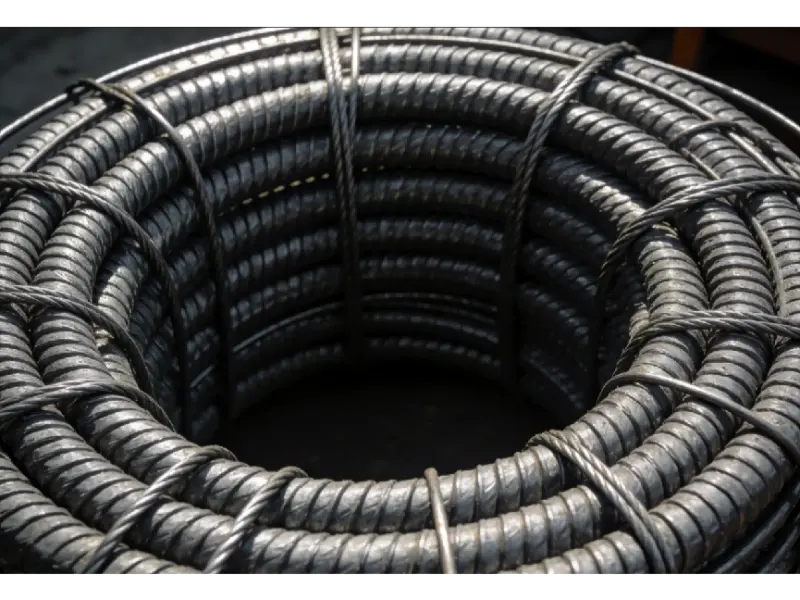
Unlike straight reinforcing bars supplied in individual lengths, coiled rebar is delivered in a wound form and processed through a dedicated straightening and feeding system. The machine draws the steel from the coil, removes its curvature through a straightening unit, feeds it to the bending mechanism, and forms the required shape according to programmed dimensions.
For manufacturers producing large quantities of concrete reinforcement components, this integrated process reduces repeated loading and unloading. A properly configured CNC stirrup bending machine can complete straightening, feeding, bending, and cutting within one production cycle.
At Shunchen, we recognize that the consistency of the incoming steel is just as important as the performance of the processing equipment. Uniform diameter, controlled rib geometry, and reliable mechanical properties help maintain stable production conditions.
How Coiled Rebar Improves Production Efficiency
1. Continuous Feeding Reduces Material Handling
When using straight rebar, operators usually need to load individual bars, position them, and prepare each batch for bending. These repeated operations consume labor and create interruptions between production cycles.
Coiled reinforcing steel changes this workflow. After the coil is correctly installed and secured, the feeding system can continuously draw material into the machine. Operators can focus more on monitoring production, checking dimensions, and managing finished components instead of repeatedly handling individual bars.
This is particularly useful for high-volume production of rectangular stirrups, square stirrups, U-shaped reinforcement, and hook-shaped components used in reinforced concrete structures.
2. Integrated Straightening and Bending Shorten Processing Time
Rebar in coils naturally retains a curved shape from the winding process. Before bending, it must pass through a suitable straightening unit to achieve the required straightness.
Modern automated rebar processing lines combine straightening, servo-controlled feeding, bending, and cutting. This reduces the need to transfer material between separate machines and helps maintain a more consistent production rhythm.
However, straightening pressure must be adjusted according to the steel diameter, rib geometry, and mechanical properties. Excessive straightening force can damage the surface ribs or affect the material's performance. We recommend following the equipment manufacturer's operating instructions and verifying the properties of the processed reinforcement.
3. Stable Feeding Improves Bending Accuracy
Automated bending equipment relies on accurate material positioning. If the feeding length fluctuates, the finished stirrups may have inconsistent side lengths, hook dimensions, or overall geometry.
Consistent rebar diameter and uniform rib patterns help the feeding rollers maintain stable contact with the steel surface. When combined with calibrated servo feeding and properly maintained bending tools, this supports repeatable dimensions across production batches.
For projects requiring large quantities of standardized reinforcement, this consistency can reduce dimensional rework and simplify subsequent assembly and inspection.
4. Less Manual Handling Supports Higher Production Output
One of the practical advantages of coiled rebar is the reduction in manual material preparation. Fewer loading operations mean less time spent moving individual bars between storage areas and processing equipment.
In production environments where CNC stirrup benders operate for extended shifts, this improvement can make the workflow more predictable. Actual output depends on several factors, including bar diameter, bending shape, machine speed, feeding distance, and operator setup.
For this reason, we recommend evaluating productivity based on the complete processing cycle rather than the bending speed alone.
Key Quality Factors for Reliable Automated Rebar Bending
Continuous feeding improves efficiency only when the steel performs consistently. Material defects or dimensional variations can interrupt an otherwise automated production line. The following factors deserve particular attention when selecting ribbed rebar for CNC processing.
1. Diameter Tolerance and Dimensional Consistency
Diameter variation affects the contact between rebar and feeding rollers. Significant deviations may lead to unstable feeding, inaccurate positioning, or excessive wear on machine components.
For automated applications, we recommend checking the nominal diameter and applicable dimensional tolerances before production. The acceptance criteria should follow the relevant steel grade and project specifications.
2. Rib Height and Rib Spacing
Transverse and longitudinal ribs provide mechanical interlock between reinforcing steel and concrete. Their geometry also affects how the bar interacts with the feeding and straightening mechanisms.
Irregular ribs, excessive surface deformation, or inconsistent rib spacing may affect feeding stability. Uniform rib geometry helps maintain predictable contact while preserving the intended bonding characteristics of the reinforcement.
3. Yield Strength, Tensile Strength, and Elongation
Mechanical properties directly influence how reinforcing steel responds to bending forces. Yield strength determines when permanent deformation begins, tensile strength reflects the maximum stress the material can withstand, and elongation provides an indication of ductility.
For automated bending, sufficient ductility is important because the steel must withstand straightening and forming without developing cracks. We recommend checking the mill test certificate and conducting mechanical and bend tests according to the applicable standards.
4. Surface Condition and Corrosion Control
Excessive rust, loose scale, burrs, or damaged rib sections can interfere with material feeding and complicate quality inspection. Surface condition should therefore be checked before the coil enters the production line.
Coiled steel should be stored on suitable supports, protected from rain and standing water, and kept clear of the ground. Light surface oxidation and severe corrosion should not be treated as equivalent conditions; the acceptance decision must follow the applicable project and material standards.
Where Is Coiled Ribbed Rebar Used?
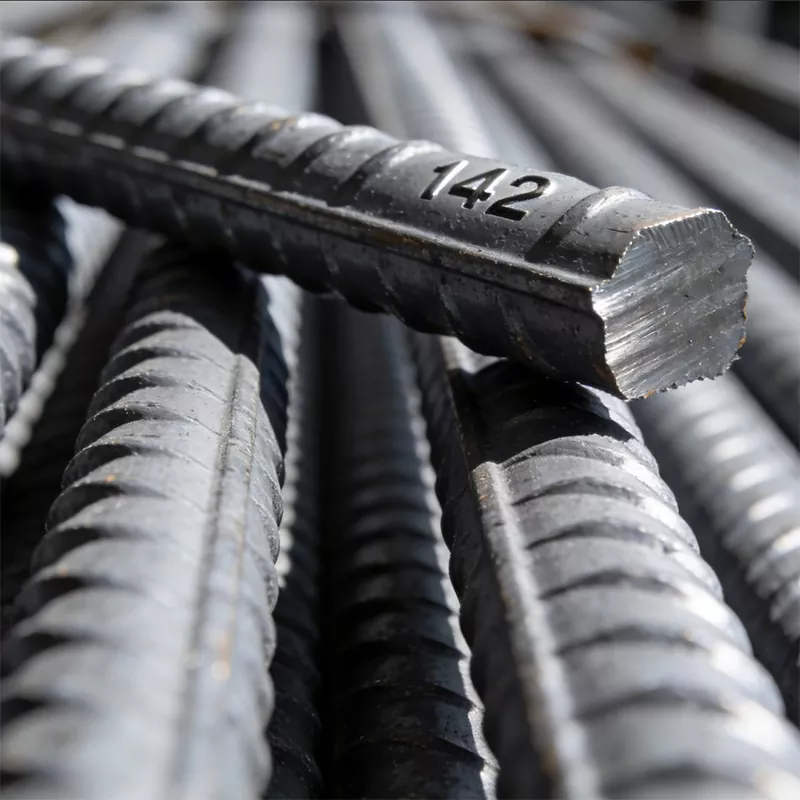
Coiled ribbed reinforcing steel is particularly suitable for applications requiring repeated shapes and relatively continuous production. After appropriate straightening and processing, it can be used to manufacture different reinforcement components.
| Application | Typical Reinforcement Components | Processing Advantage |
|---|---|---|
| Floor slabs | Stirrups and shaped reinforcement bars | Supports repeatable cutting and bending dimensions |
| Beams | Rectangular stirrups and hooks | Suitable for batch production of standardized shapes |
| Columns | Square and rectangular ties | Enables continuous feeding for repetitive forming tasks |
| Shear walls | Connecting and shaped reinforcement components | Helps maintain consistent processing dimensions |
| Precast concrete | Prefabricated reinforcement components | Supports standardized workshop production |
| Bridge and infrastructure projects | Stirrups, hooks, and other reinforcement shapes | Useful for repetitive reinforcement fabrication |
For these applications, the final reinforcement shape, bending radius, and mechanical properties must comply with the structural drawings and relevant construction standards. The suitability of a particular coil diameter and steel grade should also be confirmed with the processing equipment manufacturer.
Coiled Rebar vs. Straight Rebar: Which Is Better for Automated Processing?
Coiled and straight reinforcing bars serve different processing requirements. Neither format is universally better. The right choice depends on the required bar diameter, component geometry, production volume, and available equipment.
| Comparison Factor | Coiled Rebar | Straight Rebar |
|---|---|---|
| Material Supply | Supplied in coils | Supplied in fixed lengths |
| Feeding Method | Continuous feeding through a straightening system | Individual bar loading |
| Processing Workflow | Can integrate straightening, feeding, bending, and cutting | May require separate handling and processing stages |
| Labor Requirements | Reduced repeated loading during continuous production | More frequent material handling |
| Typical Applications | Stirrups, hooks, and repetitive reinforcement shapes | Long structural bars and larger reinforcement sections |
| Equipment Requirements | Coil pay-off, straightening, and compatible bending equipment | Bar handling and suitable cutting and bending machines |
For high-volume stirrup fabrication, coiled rebar is often a more efficient option because it supports continuous material feeding. For long structural reinforcement bars or applications involving larger diameters, straight rebar may remain the more practical choice.
How Shunchen Supports Steel Supply for Construction Projects
Reliable automated processing starts with dependable raw material supply. A manufacturer may operate an advanced CNC bending line, but inconsistent deliveries, unstable material quality, or limited processing support can still affect project schedules.
Founded in 2014 in Tianjin, China's steel industry hub, Shunchen has developed a vertically integrated steel manufacturing and supply operation serving construction, curtain wall, and solar energy projects.
Our business is supported by the following capabilities:
- 450,000+ tons of annual production capacity: Supports substantial steel supply requirements and large-volume project orders.
- Six business divisions: Covering steel processing, galvanizing, photovoltaic mounting systems, logistics, and export-related operations.
- 2,000+ global partners: Serving customers across more than 50 countries.
- Integrated supply chain: Connects manufacturing, processing, and logistics to support more coordinated project deliveries.
For concrete reinforcement applications, we focus on material consistency, processing requirements, and delivery coordination. When evaluating Concrete Reinforcement Ribbed Rebar in Coil for Automated Bending, we consider not only the steel itself but also the intended bending process, applicable standards, dimensional requirements, and handling conditions.
Our goal is to provide steel supply solutions that fit actual project requirements rather than treating every order as a standard transaction. Whether the requirement involves construction reinforcement, steel processing, or other infrastructure materials, Shunchen works to support dependable supply and long-term cooperation.
Practical Checks Before Starting an Automated Bending Line
Before processing a new batch of coiled reinforcement steel, we recommend completing several basic checks. These steps help identify potential problems before they interrupt production.
| Inspection Item | What to Check | Why It Matters |
|---|---|---|
| Material Documents | Steel grade, chemical composition, and mechanical test results | Confirms compliance with material requirements |
| Coil Condition | Deformation, loose winding, and visible damage | Helps prevent feeding interruptions |
| Surface Quality | Rust, loose scale, burrs, and damaged ribs | Reduces potential tooling and processing issues |
| Machine Setup | Roller pressure, guide alignment, and bending mandrel | Supports stable straightening and forming |
| Trial Production | Bar straightness, bend angles, and finished dimensions | Identifies deviations before mass production |
We also recommend checking the processed material after straightening. Reinforcement from coils must meet the applicable mechanical and dimensional requirements after straightening, not merely before it enters the machine.
Frequently Asked Questions
1. What is the main advantage of coiled rebar in automated bending?
The main advantage is continuous material feeding. Instead of loading individual straight bars for every processing cycle, operators can feed material directly from a coil through a compatible straightening and bending system. This reduces repeated handling and supports more efficient production of stirrups and other repetitive reinforcement shapes.
2. Can all ribbed reinforcing bars be supplied in coils?
No. Coil availability depends on the steel grade, nominal diameter, manufacturing process, and applicable product standards. The intended application and processing equipment must also be considered. Always confirm the available coil specifications before placing an order.
3. Does straightening coiled rebar affect its mechanical properties?
It can. Straightening introduces additional deformation, and the result depends on the steel properties, straightening equipment, and operating settings. The processed reinforcement should retain the required mechanical properties and dimensional characteristics after straightening. Testing should follow the applicable product standards.
4. What causes coiled rebar to crack during automated bending?
Potential causes include insufficient ductility, unsuitable steel properties, excessive straightening force, an incorrect bending mandrel diameter, or processing outside the recommended temperature conditions. Material certificates, bend tests, and correct machine setup help reduce these risks.
5. Does ribbed rebar affect the feeding performance of CNC bending machines?
Ribbed surfaces are designed primarily to improve the mechanical bond between reinforcing steel and concrete. Their geometry also affects contact with feeding rollers. Uniform rib height and spacing, combined with stable diameter tolerances and suitable roller settings, help maintain reliable feeding.
6. How should coiled rebar be stored before processing?
Store coils on stable supports in a dry, well-ventilated area. Keep them clear of the ground and protect them from prolonged exposure to rain and standing water. Avoid rough lifting operations that may deform the coil or damage the steel surface.
7. What information should be confirmed when purchasing coiled reinforcement steel?
Important details include the steel grade, nominal diameter, coil weight, applicable standard, mechanical properties, rib geometry, dimensional tolerances, test documentation, and delivery requirements. The compatibility of the material with the intended CNC straightening and bending equipment should also be confirmed.
8. How does Shunchen support large-scale steel supply requirements?
Founded in 2014, Shunchen combines steel manufacturing with processing, galvanizing, logistics, and export operations. With more than 450,000 tons of annual production capacity and a network of over 2,000 global partners across 50+ countries, we support coordinated steel supply for construction and infrastructure projects.
Conclusion
Coiled rebar improves automated bending efficiency by reducing repeated material handling and allowing straightening, feeding, bending, and cutting to work as a coordinated process. However, continuous production depends on more than machine speed. Consistent steel dimensions, suitable mechanical properties, controlled rib geometry, and correct equipment settings are all essential.
At Shunchen, we understand the importance of connecting steel quality with practical processing requirements. Our integrated manufacturing and supply capabilities help support construction and infrastructure projects with reliable steel solutions. Choosing the right Concrete Reinforcement Ribbed Rebar in Coil for Automated Bending is an important step toward more consistent reinforcement fabrication and efficient production.
For more information about our steel products and supply capabilities, visit Shunchen or contact our team to discuss your project requirements.
Technical References
Related News
- What Role Does Cold Forming Play in Z Section Steel Manufacturing?
- Which Structural Differences Matter When Comparing T-Shaped Steel with Angle Steel?
- How Do Hot Rolled and Welded T-Shaped Steel Profiles Differ in Manufacturing and Performance?
- Why Is Octagonal Steel a Core Material for Multiple Industries?
- What Are the Common Lengths Available for Steel Channels?
- How Does Hot-Dip Galvanizing Protect Steel Channels?
Leave me a message

News Recommendations