Why Is Octagonal Steel a Core Material for Multiple Industries?
In the world of industrial manufacturing, the shape of a material often determines its function. A round bar is ideal for machining on a lathe. A square bar is easy to stack and clamp. But what about an octagonal bar? At first glance, the octagonal shape may seem like a novelty—a geometric curiosity with no clear advantage over its round or square counterparts. Yet, in industries ranging from oil and gas to construction and heavy machinery, Octagonal Steel has become a core material. It is used in drill collars, tool joints, bridge bearings, and a host of other critical components. The reason is not aesthetic; it is a matter of engineering. The octagonal shape offers a unique combination of properties: it provides flat surfaces for wrenching, it resists rotation under torque, it distributes stress more evenly than a square, and it is more material-efficient than a round bar for certain applications.
The question of why Octagonal Steel is a core material for multiple industries is a question of applied mechanics and manufacturing practicality. The octagonal shape is a compromise between the round and the square. It has more flat surfaces than a round bar, which provides better grip for tools. It has more corners than a square, which distributes stress more evenly. It is also easier to grip and turn with a wrench than a round bar, and it is less likely to slip than a square bar. These advantages have made Octagonal Steel the material of choice for a wide range of applications. This article will examine the properties, manufacturing, and applications of Octagonal Steel. We will provide detailed specifications and performance data from our factory at Tianjin Shunchen Hongye Enterprise Management Co., Ltd.
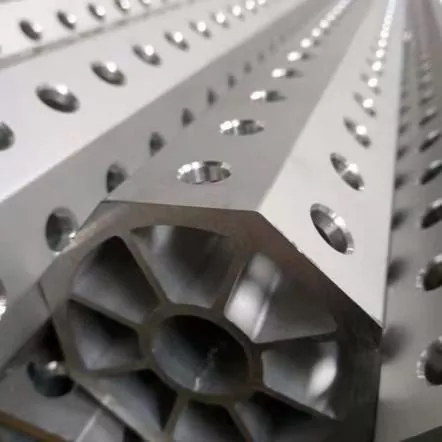
Table of Contents
- 1. What Is Octagonal Steel and How Is It Made?
- 2. Why Does the Octagonal Shape Offer Unique Mechanical Advantages?
- 3. What Are the Key Applications of Octagonal Steel Across Industries?
- 4. How Does Octagonal Steel Compare to Round and Square Bars?
- 5. What Are the Key Specifications for Octagonal Steel?
- 6. Frequently Asked Questions (FAQ)
- 7. Conclusion
1. What Is Octagonal Steel and How Is It Made?
Octagonal Steel is a type of long steel product with an eight-sided cross-section. It is produced in a variety of sizes, from small bars with a circumscribed diameter of 20mm to large billets with a diameter of 500mm or more. The manufacturing process for Octagonal Steel is similar to that of other long products. It begins with the melting of scrap or raw iron in an electric arc furnace. The molten steel is then refined to adjust its chemical composition, and it is cast into billets or blooms. These semi-finished forms are then reheated and rolled or forged into the octagonal shape. The rolling process uses a series of grooved rolls that gradually shape the steel into the octagonal profile. The forging process uses a hammer or press to shape the steel, which produces a product with a more uniform grain structure and better mechanical properties.
The manufacturing process for Octagonal Steel must be carefully controlled to ensure that the final product meets the required specifications. The dimensions of the octagon—the width across the flats, the width across the corners, and the corner radius—must be held within tight tolerances. The surface of the steel must be free of defects, such as cracks, seams, and scale. The mechanical properties, including yield strength, tensile strength, and hardness, must be consistent throughout the length of the bar. The table below summarizes the key manufacturing steps and their quality control points.
| Manufacturing Step | Description | Quality Control Point |
| Melting | Scrap or raw iron melted in electric arc furnace | Chemical composition analysis |
| Refining | Adjustment of chemical composition | Spectrometer analysis |
| Casting | Molten steel cast into billets or blooms | Surface inspection, ultrasonic testing |
| Reheating | Billets reheated to rolling temperature | Temperature control |
| Rolling / Forging | Shaping into octagonal profile | Dimensional inspection, surface inspection |
| Finishing | Straightening, cutting, and surface treatment | Final dimensional and mechanical testing |
At Tianjin Shunchen Hongye Enterprise Management Co., Ltd., our factory specializes in the production of Octagonal Steel for a wide range of industrial applications. We use advanced rolling and forging equipment to produce octagonal bars with precise dimensions and consistent mechanical properties. Our quality control laboratory is equipped with spectrometers, tensile testers, and hardness testers to verify the quality of every batch we produce.
2. Why Does the Octagonal Shape Offer Unique Mechanical Advantages?
The octagonal shape offers several mechanical advantages over round and square bars. The first advantage is improved grip. An octagonal bar has eight flat surfaces, which provide a better grip for wrenches, clamps, and other tools. This is particularly important in applications where the bar must be rotated or held securely, such as in drill strings or tool joints. A round bar is difficult to grip with a wrench because it tends to slip. A square bar is easier to grip, but it has only four flat surfaces, which limits the range of angles at which a wrench can be applied. An octagonal bar, with its eight flat surfaces, allows a wrench to be applied at 45-degree increments, providing greater flexibility in tight spaces. The second advantage is resistance to rotation. When an octagonal bar is subjected to torque, the flat surfaces resist rotation more effectively than a round bar. This is important in applications where the bar must transmit torque without slipping, such as in drill collars and tool joints. The third advantage is stress distribution. The octagonal shape distributes stress more evenly than a square shape. The corners of a square bar are stress concentrators, which can lead to cracking under high loads. The corners of an octagonal bar are less sharp, which reduces stress concentration and improves fatigue resistance. The table below compares the mechanical properties of round, square, and octagonal bars.
| Property | Round Bar | Square Bar | Octagonal Bar |
| Grip Surfaces | 0 (smooth) | 4 | 8 |
| Wrench Angles | Infinite (but slips) | 90 degrees | 45 degrees |
| Rotation Resistance | Low | High | High |
| Stress Concentration | None (but low grip) | High (sharp corners) | Moderate (chamfered corners) |
| Material Efficiency | High (for pressure) | Moderate | High (for torque) |
At our factory, we produce Octagonal Steel in a range of sizes and grades to meet the specific requirements of our customers. We can also customize the corner radius and the surface finish to optimize the performance of the bar for its intended application. Our engineering team can assist with the selection of the appropriate octagonal profile for your specific needs.
3. What Are the Key Applications of Octagonal Steel Across Industries?
Octagonal Steel is used in a wide range of industries, each of which takes advantage of the unique properties of the octagonal shape. In the oil and gas industry, Octagonal Steel is used for drill collars and tool joints. Drill collars are heavy, thick-walled tubes that are used to provide weight on the drill bit and to stiffen the drill string. The octagonal shape provides a flat surface for the application of make-up torque and helps to prevent the drill string from rotating in the hole. Tool joints are the threaded connections between drill pipes. Octagonal tool joints provide a better grip for the power tongs that are used to make and break the connections. In the construction industry, Octagonal Steel is used for bridge bearings, column base plates, and anchor bolts. The octagonal shape provides a large bearing area and resists rotation under seismic loads. In the heavy machinery industry, Octagonal Steel is used for shafts, spindles, and hydraulic cylinder rods. The octagonal shape provides a positive drive for gears and pulleys and allows for easy adjustment of the angular position. The table below summarizes the key applications of Octagonal Steel and the reasons for its use.
| Industry | Application | Reason for Using Octagonal Steel |
| Oil and Gas | Drill collars | Provides weight, stiffness, and torque resistance |
| Oil and Gas | Tool joints | Provides grip for power tongs |
| Construction | Bridge bearings | Large bearing area, rotation resistance |
| Construction | Anchor bolts | Prevents rotation during tightening |
| Heavy Machinery | Shafts and spindles | Positive drive, easy angular adjustment |
| Heavy Machinery | Hydraulic cylinder rods | Flat surfaces for wrenching, rotation resistance |
At Tianjin Shunchen Hongye Enterprise Management Co., Ltd., our factory produces Octagonal Steel for all these applications. We work closely with our customers to understand their specific requirements and to provide the optimal octagonal profile, steel grade, and heat treatment for their application. Our goal is to provide a product that meets the highest standards of quality and performance.
4. How Does Octagonal Steel Compare to Round and Square Bars?
When selecting a steel bar for a specific application, engineers must choose between round, square, and octagonal profiles. Each profile has its own advantages and disadvantages, and the choice depends on the requirements of the application. Round bars are the most common and the most economical to produce. They are ideal for applications where the bar is machined on a lathe, such as shafts and pins. They are also used for pressure vessels and pipelines, where the round shape provides the most efficient distribution of hoop stress. Square bars are used in applications where the bar must be stacked or clamped, such as in frames and supports. They are also used for decorative purposes, such as in railings and gates. Octagonal bars are used in applications where the bar must be gripped or turned, such as in drill strings and tool joints. They are also used in applications where the bar must resist rotation, such as in anchor bolts and bridge bearings. The table below provides a detailed comparison of the three profiles.
| Criteria | Round Bar | Square Bar | Octagonal Bar |
| Machinability | Excellent | Good | Good |
| Grip for Tools | Poor | Good | Excellent |
| Rotation Resistance | Poor | Good | Excellent |
| Stress Distribution | Excellent | Poor | Good |
| Material Cost | Lowest | Low | Moderate |
| Typical Applications | Shafts, pins, pipes | Frames, supports | Drill collars, tool joints |
At our factory, we produce all three profiles—round, square, and octagonal—so we can provide our customers with an unbiased recommendation for their specific application. Our engineering team can analyze the requirements of your application and recommend the profile that offers the best combination of performance and cost.
5. What Are the Key Specifications for Octagonal Steel?
The key specifications for Octagonal Steel include the steel grade, the dimensions (width across flats, width across corners), the length, the straightness, the surface finish, and the mechanical properties. The table below provides a summary of the typical specifications for our Octagonal Steel products.
| Specification | Range | Notes |
| Steel Grade | Carbon Steel, Alloy Steel, Stainless Steel | Selected based on application |
| Width Across Flats | 20 - 500 mm | Custom sizes available |
| Width Across Corners | 22 - 540 mm | Calculated from flats |
| Length | 3 - 12 meters | Custom lengths available |
| Straightness | 1 mm/m max | Critical for machining |
| Surface Finish | As-rolled, Peeled, Ground | Selected based on application |
| Tolerance | +/- 0.5% to +/- 2% | Depends on size and process |
| Mechanical Properties | Yield, Tensile, Hardness | Certified to standard |
At Shunchen, our factory produces Octagonal Steel to meet these specifications and more. We can customize the steel grade, dimensions, and heat treatment to suit your specific requirements. Our quality control laboratory verifies the chemical composition and mechanical properties of every batch, and we provide a certificate of conformance with every shipment.
6. Frequently Asked Questions (FAQ)
Question 1: What is the difference between octagonal steel and hexagonal steel?
Answer: Octagonal steel has eight sides, while hexagonal steel has six sides. Octagonal steel provides more flat surfaces for gripping and a more uniform stress distribution. Hexagonal steel is commonly used for nuts and bolts, where a six-sided shape is standard. Octagonal steel is used in applications where a higher torque capacity or a more uniform stress distribution is required, such as in drill collars and tool joints.
Question 2: What steel grades are available for octagonal steel?
Answer: Octagonal steel is available in a wide range of steel grades, including carbon steel (e.g., 1045, 4140), alloy steel (e.g., 42CrMo4, 34CrNiMo6), and stainless steel (e.g., 304, 316, 17-4PH). The choice of grade depends on the required mechanical properties, corrosion resistance, and operating temperature. Our factory can supply octagonal steel in any of these grades and can recommend the best grade for your application.
Question 3: Can octagonal steel be machined?
Answer: Yes, octagonal steel can be machined using standard machining processes, including turning, milling, drilling, and grinding. The flat surfaces of the octagon provide a good reference for clamping and setup. The corners of the octagon can be chamfered or radiused to reduce stress concentration and improve machinability. Our factory can supply octagonal steel in a peeled or ground condition to facilitate machining.
Question 4: What is the maximum size of octagonal steel that can be produced?
Answer: The maximum size of octagonal steel depends on the manufacturing process. Our factory can produce octagonal steel with a width across flats of up to 500mm. Larger sizes may be available on request. The size is limited by the capacity of the rolling mill or forging press. We can also produce custom sizes to meet specific project requirements.
Question 5: What are the tolerances for octagonal steel?
Answer: The tolerances for octagonal steel depend on the size and the manufacturing process. For hot-rolled octagonal steel, the tolerance on the width across flats is typically +/- 1% to +/- 2%. For peeled or ground octagonal steel, the tolerance can be as tight as +/- 0.5% or better. Our factory can supply octagonal steel to meet the tolerances specified in international standards such as ASTM A29 and EN 10060.
7. Conclusion
Octagonal Steel is a core material for multiple industries because of its unique combination of mechanical properties. Its eight flat surfaces provide excellent grip for tools, its geometry resists rotation under torque, and its corner design distributes stress more evenly than a square bar. These properties make it the material of choice for applications ranging from drill collars in the oil and gas industry to bridge bearings in construction and hydraulic cylinder rods in heavy machinery. At Tianjin Shunchen Hongye Enterprise Management Co., Ltd., our factory has the expertise and the equipment to produce high-quality Octagonal Steel that meets the most demanding requirements. We offer a wide range of steel grades, sizes, and finishes, and we provide comprehensive technical support to help our customers select the optimal product for their application.
Whether you are designing a new component or upgrading an existing one, we invite you to contact our technical team to discuss your requirements. We can provide product specifications, samples, and application support. Our commitment to quality and customer satisfaction has made us a trusted partner for industrial manufacturers around the world.
Contact Tianjin Shunchen Hongye Enterprise Management Co., Ltd. today to discuss your Octagonal Steel requirements and discover how our products can improve the performance and reliability of your applications.
Related News
- How Do Hot Rolled and Welded T-Shaped Steel Profiles Differ in Manufacturing and Performance?
- What Are the Common Lengths Available for Steel Channels?
- How Does Hot-Dip Galvanizing Protect Steel Channels?
- What makes Angle Steel the go-to material for industrial plant maintenance?
- Why Is Hot Dip Galvanized Grating Important for Modern Industry?
- What makes Angle Steel the top choice for transmission tower construction?
Leave me a message