Which Structural Differences Matter When Comparing T-Shaped Steel with Angle Steel?
A structural engineer is designing a steel frame for a mezzanine floor. The frame requires beams that can carry bending loads over a span, and columns that can resist compression. The engineer has two candidate sections: T-shaped steel and angle steel. Both are commonly available, both are relatively economical, and both can be welded or bolted. But their structural behavior is fundamentally different. T-shaped steel, with its flange and web, is efficient in bending because the material is concentrated away from the neutral axis. Angle steel, with its two legs, is efficient in tension and compression but less efficient in bending because its centroid is offset and its principal axes are rotated. Choosing the wrong section can lead to overdesign, deflection problems, or even failure. For procurement managers and structural engineers, understanding these structural differences is essential for making the right specification.
This guide is written for buyers and engineers who need to compare T-shaped steel and angle steel for structural applications. We will examine the section properties that determine structural performance, the load behavior of each section, the connection and fabrication considerations, and the criteria for selecting the right section for each part of a structure. We will also provide detailed product parameters from our factory at Tianjin Shunchen Hongye Enterprise Management Co., Ltd. Whether you are sourcing steel for building frames, industrial platforms, transmission towers, or machinery supports, this guide will help you make an informed decision.
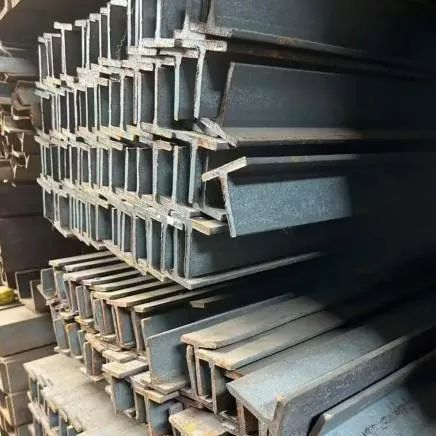
Table of Contents
- 1. What Are T-Shaped Steel and Angle Steel, and How Are They Made?
- 2. Which Section Properties Determine Structural Performance?
- 3. How Do the Two Sections Behave Under Different Load Types?
- 4. What Connection and Fabrication Differences Matter?
- 5. How Do You Select the Right Section for Each Application?
- 6. What Are the Key Product Parameters from Our Factory?
- 7. Frequently Asked Questions (FAQ)
- 8. Conclusion
1. What Are T-Shaped Steel and Angle Steel, and How Are They Made?
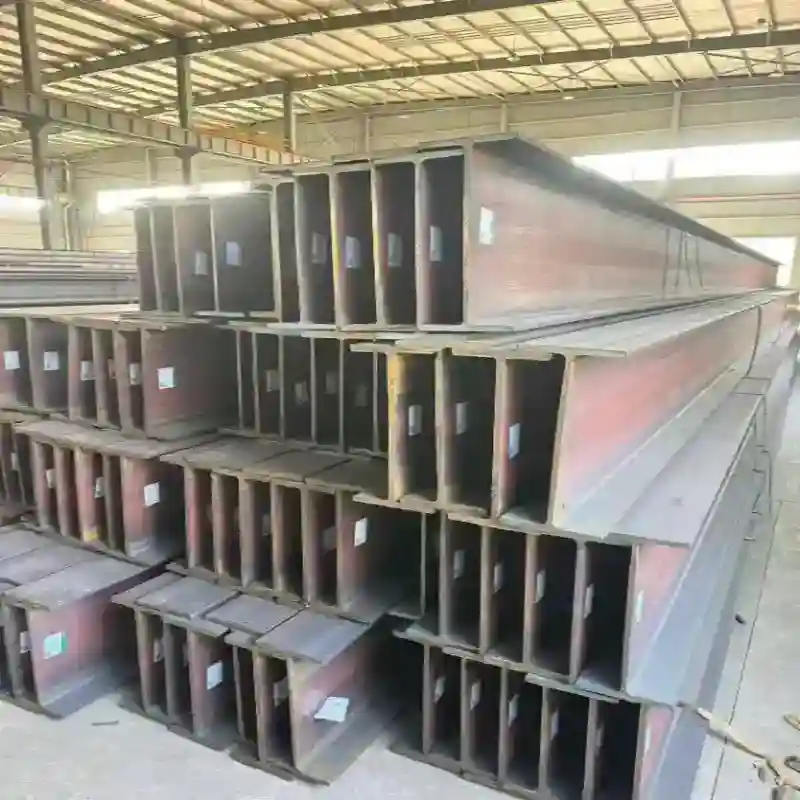
T-shaped steel and angle steel are both hot-rolled structural sections, but their geometries are fundamentally different. T-shaped steel has a cross-section that resembles the letter T, with a horizontal flange and a vertical web. The flange and web are typically of equal or unequal thickness, depending on the standard. The section is produced by hot rolling a billet through a series of grooved rolls that progressively shape the profile. T-shaped steel is also produced by welding two plates together, or by splitting an I-beam or H-beam along its web. Angle steel has a cross-section that resembles the letter L, with two legs of equal or unequal length. It is produced by hot rolling, and it is one of the simplest and most widely used structural sections. The table below summarizes the production methods and typical dimensions of each section.
| Characteristic | T-Shaped Steel | Angle Steel |
| Cross-Section Shape | T-shape (flange + web) | L-shape (two legs) |
| Production Method | Hot rolling, welding, or splitting | Hot rolling |
| Typical Flange Width | 50 - 400 mm | 20 - 250 mm (leg length) |
| Typical Web Height | 50 - 400 mm | 20 - 250 mm (leg length) |
| Typical Thickness | 5 - 30 mm | 3 - 35 mm |
| Standard | EN 10055, ASTM A6 | EN 10056, ASTM A6 |
At Shunchen, our factory supplies T-shaped steel in a range of sizes and grades. We source from reputable mills and maintain a comprehensive inventory for fast delivery. We also supply angle steel for applications where it is the more suitable section. Our technical team can assist with the selection of the right section for your application.
2. Which Section Properties Determine Structural Performance?
The structural performance of a steel section is determined by its geometric properties, which are collectively known as section properties. The most important section properties are the cross-sectional area, the centroid, the moment of inertia, the radius of gyration, the section modulus, and the plastic section modulus. These properties determine how the section resists axial loads, bending moments, and shear forces. The table below compares the key section properties of a typical T-shaped steel and a typical angle steel of similar weight.
| Property | T-Shaped Steel (100x100x10 mm) | Angle Steel (100x100x10 mm) |
| Cross-Sectional Area (cm²) | 19.0 | 19.2 |
| Centroid (from back of web) | ~28 mm | ~28 mm (from back of leg) |
| Moment of Inertia, Ix (cm⁴) | ~230 | ~170 |
| Moment of Inertia, Iy (cm⁴) | ~80 | ~45 |
| Radius of Gyration, rx (cm) | ~3.5 | ~3.0 |
| Section Modulus, Sx (cm³) | ~46 | ~34 |
| Principal Axes | Aligned with flange and web | Rotated 45° |
The table shows that the T-shaped steel has a higher moment of inertia and section modulus than the angle steel of similar weight. This means that the T-shaped steel is more efficient in bending. The angle steel, however, has its principal axes rotated, which means that its bending behavior is more complex. At our factory, we provide detailed section property data for all our T-shaped steel products, allowing engineers to perform accurate structural calculations.
3. How Do the Two Sections Behave Under Different Load Types?
The behavior of a steel section under load depends on the type of load and the orientation of the section. Under axial tension, both T-shaped steel and angle steel perform well because the entire cross-section is effective. Under axial compression, the behavior depends on the slenderness of the section and the buckling mode. T-shaped steel is susceptible to flexural-torsional buckling because its shear center and centroid do not coincide. Angle steel is also susceptible to flexural-torsional buckling, and its principal axes are rotated, which complicates the design. Under bending, T-shaped steel is efficient when the load is applied in the plane of the web, because the flange provides a large compression area. Angle steel is less efficient in bending because its principal axes are rotated, and the load is rarely applied in the plane of the principal axis. The table below summarizes the behavior of each section under different load types.
| Load Type | T-Shaped Steel Behavior | Angle Steel Behavior |
| Axial Tension | Excellent (full section effective) | Excellent (full section effective) |
| Axial Compression | Good (susceptible to flexural-torsional buckling) | Good (susceptible to flexural-torsional buckling) |
| Bending (in plane of web) | Excellent (high section modulus) | Poor (principal axes rotated) |
| Bending (out of plane) | Poor (low lateral stiffness) | Poor (low lateral stiffness) |
| Shear | Good (web resists shear) | Moderate (leg resists shear) |
| Torsion | Moderate (open section) | Moderate (open section) |
At Tianjin Shunchen Hongye Enterprise Management Co., Ltd., our technical team can assist with the analysis of T-shaped steel under different load types. We provide section property data, buckling curves, and design guidance to help engineers select the right section for their application. We also supply angle steel for applications where it is the more suitable choice.
4. What Connection and Fabrication Differences Matter?
The connection and fabrication characteristics of T-shaped steel and angle steel also differ, and these differences affect the cost and complexity of construction. T-shaped steel is typically connected by welding or bolting through the flange or web. The flat surfaces of the flange and web provide good access for welding and bolting. Angle steel is typically connected by bolting through the legs or by welding along the edges. The legs provide two orthogonal surfaces, which can be advantageous for certain connections, such as connecting to a flat plate or to another angle. The table below summarizes the connection and fabrication considerations for each section.
| Consideration | T-Shaped Steel | Angle Steel |
| Welding Access | Good (flat flange and web surfaces) | Good (flat leg surfaces) |
| Bolting Access | Good (flange and web) | Good (legs) |
| Connection to Flat Plate | Requires gusset or bracket | Direct bolting through leg |
| Connection to Another Section | Requires gusset or bracket | Can be bolted back-to-back |
| Fabrication Complexity | Moderate | Low |
| Typical Use | Beams, chords, struts | Bracing, trusses, columns, connections |
At our factory, we supply T-shaped steel and angle steel in a range of sizes and grades. We can also provide fabrication services, including cutting, drilling, and welding, to prepare the sections for assembly. Our goal is to provide our customers with a complete solution that simplifies their procurement and construction process.
5. How Do You Select the Right Section for Each Application?
Selecting the right section for each application requires a systematic evaluation of the loads, the span, the support conditions, and the connection requirements. The first step is to determine the type of load: axial, bending, or combined. The second step is to determine the required section properties: area, moment of inertia, and section modulus. The third step is to compare the available sections and select the one that meets the requirements with the lowest weight and cost. The fourth step is to check the connection details and ensure that the section can be connected efficiently. The table below provides a selection guide for common applications.
| Application | Recommended Section | Reason |
| Floor Beam | T-Shaped Steel | High bending efficiency in plane of web |
| Roof Purlin | T-Shaped Steel or Angle Steel | Depends on span and load direction |
| Bracing Member | Angle Steel | Efficient in tension and compression; easy connections |
| Truss Chord | T-Shaped Steel | High bending efficiency; good for welded connections |
| Truss Web Member | Angle Steel | Efficient in axial load; easy bolted connections |
| Column (Light Load) | Angle Steel | Good compression capacity; easy connections |
| Column (Heavy Load) | T-Shaped Steel or H-Beam | Higher compression capacity |
At Tianjin Shunchen Hongye Enterprise Management Co., Ltd., our technical team can assist with the selection process. We provide section property data, design guidance, and cost comparisons to help engineers make informed decisions. We also supply both T-shaped steel and angle steel, so we can provide a complete solution for any project.
6. What Are the Key Product Parameters from Our Factory?
The following table provides the key product parameters for our T-shaped steel. We also supply angle steel in a range of sizes. Our factory can provide custom cutting and fabrication services to meet specific project requirements.
| Parameter | Specification Range | Notes |
| Flange Width | 50 - 400 mm | Custom sizes available |
| Web Height | 50 - 400 mm | Custom sizes available |
| Flange Thickness | 5 - 30 mm | Custom thicknesses available |
| Web Thickness | 5 - 30 mm | Custom thicknesses available |
| Length | 6,000 - 12,000 mm | Custom lengths available |
| Steel Grade | Q235, Q345, S275, S355 | Selected for strength requirements |
| Surface Finish | Black, Galvanized, Painted | Selected for corrosion protection |
| Standard | EN 10055, ASTM A6, GB/T 706 | Compliance with international standards |
| MOQ | 5 tons | Negotiable for large orders |
| Lead Time | 2 - 4 weeks | Depends on quantity and customization |
At our factory, we manufacture our T-shaped steel to meet these specifications and more. We can customize the dimensions, steel grade, and surface finish to suit your specific requirements. Our quality control system includes inspection of raw materials, in-process inspection, and final inspection before shipment. Our goal is to provide our customers with high-quality T-shaped steel that meets their structural requirements.
7. Frequently Asked Questions (FAQ)
Question 1: Which section is stronger in bending, T-shaped steel or angle steel?
Answer: T-shaped steel is generally stronger in bending than angle steel of similar weight. This is because the T-shaped section has a higher moment of inertia and section modulus, which means that it can resist bending moments more efficiently. The flange of the T-shaped steel provides a large compression area, while the web provides a large tension area. Angle steel has its principal axes rotated, which reduces its bending efficiency.
Question 2: Which section is better for bracing and truss members?
Answer: Angle steel is generally better for bracing and truss members. Angle steel is efficient in axial tension and compression, and its two legs provide convenient surfaces for bolted connections. Angle steel is also widely available and economical. T-shaped steel is better for members that are subjected to bending, such as chords and beams.
Question 3: Can T-shaped steel and angle steel be used together in the same structure?
Answer: Yes, T-shaped steel and angle steel can be used together in the same structure. In fact, it is common practice to use T-shaped steel for the main bending members and angle steel for the bracing and connection members. The two sections complement each other, and their combination can provide an efficient and economical structure.
Question 4: What is the difference between equal-leg and unequal-leg angle steel?
Answer: Equal-leg angle steel has two legs of the same length. Unequal-leg angle steel has two legs of different lengths. Unequal-leg angle steel is used when the loads are different in the two directions, or when the connection details require a longer leg on one side. The choice depends on the specific application and the design requirements.
Question 5: How do I specify the steel grade for T-shaped steel?
Answer: The steel grade for T-shaped steel should be specified based on the required strength and the welding requirements. Common grades include Q235 (similar to S275) and Q345 (similar to S355). Higher grades are used for higher strength requirements. The steel grade should be specified in the purchase order along with the section dimensions and the standard. Our technical team can advise on the appropriate grade for your application.
8. Conclusion
The structural differences between T-shaped steel and angle steel are significant and should be carefully considered when specifying steel for a project. T-shaped steel is more efficient in bending, making it suitable for beams, chords, and other bending members. Angle steel is more efficient in axial load and easier to connect, making it suitable for bracing, truss webs, and columns. Understanding the section properties, the load behavior, and the connection characteristics of each section allows engineers to make informed decisions that optimize the structure's performance and cost. At Tianjin Shunchen Hongye Enterprise Management Co., Ltd., our factory supplies both T-shaped steel and angle steel, and our technical team can assist with the selection process. We are committed to providing our customers with high-quality steel products and expert technical support.
Whether you are designing a building frame, an industrial platform, or a transmission tower, we invite you to contact us to discuss your requirements. We can provide technical data, samples, and customized solutions. Our commitment to quality and customer satisfaction has made us a trusted partner for steel procurement around the world.
Contact Tianjin Shunchen Hongye Enterprise Management Co., Ltd. today to discuss your T-Shaped Steel requirements and discover how our products can meet your structural needs.
Related News
- How Do Hot Rolled and Welded T-Shaped Steel Profiles Differ in Manufacturing and Performance?
- Why Is Octagonal Steel a Core Material for Multiple Industries?
- What Are the Common Lengths Available for Steel Channels?
- How Does Hot-Dip Galvanizing Protect Steel Channels?
- What makes Angle Steel the go-to material for industrial plant maintenance?
- Why Is Hot Dip Galvanized Grating Important for Modern Industry?
Leave me a message