How Do Hot Rolled and Welded T-Shaped Steel Profiles Differ in Manufacturing and Performance?
When a structural engineer specifies T-Shaped Steel for a project, the decision between hot rolled and welded profiles is often made without a full understanding of the implications. Both products have the same T-shaped cross-section, and both are made from steel. But they are produced through fundamentally different manufacturing processes, and those processes create differences in performance, cost, and suitability that can affect the success of the project. A buyer who selects the wrong type may find that the steel does not meet the required tolerances, that it costs more than necessary, or that it fails to perform as expected under load. For procurement managers, structural engineers, and project planners, understanding these differences is essential for making informed purchasing decisions.
This guide is written for buyers who need to source T-Shaped Steel for construction, infrastructure, or industrial applications. We will explain how hot rolled and welded T-shaped steel profiles are manufactured, how their manufacturing processes affect their performance, the key specifications to include in a purchase order, and the criteria for evaluating a supplier. We will also provide detailed product parameters from our factory at Tianjin Shunchen Hongye Enterprise Management Co., Ltd. Whether you are sourcing steel for a bridge, a building, or a piece of machinery, this guide will help you select the right product for your application.
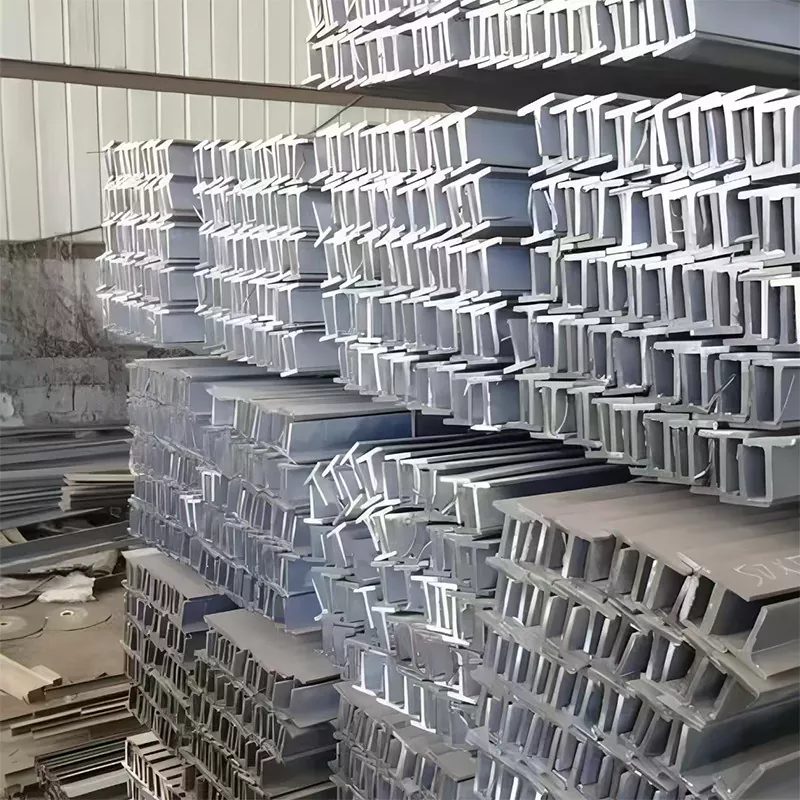
Table of Contents
- 1. What Is T-Shaped Steel and Where Is It Used?
- 2. How Is Hot Rolled T-Shaped Steel Manufactured?
- 3. How Is Welded T-Shaped Steel Manufactured?
- 4. What Are the Performance Differences Between Hot Rolled and Welded T-Shaped Steel?
- 5. What Specifications Should Buyers Include in a Purchase Order?
- 6. How Do You Evaluate a T-Shaped Steel Supplier?
- 7. Frequently Asked Questions (FAQ)
- 8. Conclusion
1. What Is T-Shaped Steel and Where Is It Used?
T-Shaped Steel is a structural steel profile with a cross-section that resembles the letter "T." It consists of a horizontal flange and a vertical web. The T-shape provides a high strength-to-weight ratio and excellent resistance to bending. T-Shaped Steel is used in a wide range of applications, including building frames, bridge decks, machine bases, and support structures. It is also used in the fabrication of marine vessels, railcars, and industrial equipment. The profile is available in a range of sizes, from small sections used in light fabrication to large sections used in heavy construction. The table below summarizes the common applications of T-Shaped Steel.
| Application | Typical Size Range | Key Requirements |
| Building Frames | 100 - 400 mm | High strength, dimensional accuracy |
| Bridge Decks | 200 - 600 mm | High load capacity, fatigue resistance |
| Machine Bases | 50 - 200 mm | Vibration damping, flatness |
| Support Structures | 100 - 300 mm | Corrosion resistance, weldability |
| Marine Vessels | 100 - 400 mm | Corrosion resistance, toughness |
| Railcars | 100 - 300 mm | Fatigue resistance, weight |
At Tianjin Shunchen Hongye Enterprise Management Co., Ltd., our factory supplies T-Shaped Steel in both hot rolled and welded configurations. We work with customers to understand their application requirements and to recommend the product that best meets their needs. Our team has extensive experience in the steel industry and can provide technical support throughout the procurement process.
2. How Is Hot Rolled T-Shaped Steel Manufactured?
Hot rolled T-Shaped Steel is produced by passing a steel billet through a series of rolling mills at high temperature. The billet is heated to above the recrystallization temperature, typically around 1,100°C to 1,300°C. It is then passed through a series of grooved rolls that gradually shape the steel into the T profile. The rolling process refines the grain structure of the steel and improves its mechanical properties. The final product has a uniform cross-section and a smooth surface finish. The manufacturing process for hot rolled T-Shaped Steel is highly efficient for large production volumes, and it produces a product with excellent dimensional consistency. However, the process requires expensive tooling and is only economical for standard sizes. The table below summarizes the key steps in the hot rolling process.
| Step | Description | Temperature |
| Heating | Billet is heated in a reheat furnace | 1,100°C - 1,300°C |
| Roughing | Billet is passed through roughing mills | 1,000°C - 1,200°C |
| Finishing | Steel is shaped into T profile | 800°C - 1,000°C |
| Cooling | Controlled cooling on cooling bed | Ambient |
| Straightening | Roller straightening to remove distortion | Ambient |
| Cutting | Cut to specified lengths | Ambient |
At our factory, we source hot rolled T-Shaped Steel from reputable mills that meet our stringent quality requirements. We verify the chemical composition and mechanical properties of each batch, and we inspect the dimensions and surface finish. Our goal is to provide our customers with hot rolled T-Shaped Steel that meets their specifications and performs reliably in their applications.
3. How Is Welded T-Shaped Steel Manufactured?
Welded T-Shaped Steel is produced by welding two steel plates together to form the T profile. The vertical plate (the web) and the horizontal plate (the flange) are typically joined using a continuous fillet weld or a full penetration weld. The welding process allows for greater flexibility in size and dimensions than hot rolling. Welded T-Shaped Steel can be produced in sizes that are not available in hot rolled profiles, and it can be produced in small quantities economically. The quality of the welded product depends on the quality of the welding, the preparation of the plates, and the skill of the welder. The table below summarizes the key steps in the welded manufacturing process.
| Step | Description | Key Parameters |
| Plate Cutting | Plates are cut to size | Length, width, thickness |
| Edge Preparation | Edges are beveled or cleaned | Bevel angle, surface cleanliness |
| Fit-Up | Plates are positioned and tack welded | Alignment, gap, squareness |
| Welding | Continuous fillet or full penetration weld | Current, voltage, travel speed |
| Inspection | Visual and non-destructive testing | Weld quality, dimensions |
| Straightening | Straightening to remove distortion | Straightness tolerance |
At our factory, we produce welded T-Shaped Steel using certified welders and approved welding procedures. We conduct visual inspection and non-destructive testing to ensure that the welds meet the required quality standards. We also verify the dimensions and straightness of the finished product. Our goal is to provide our customers with welded T-Shaped Steel that meets their specifications and performs reliably in their applications.
4. What Are the Performance Differences Between Hot Rolled and Welded T-Shaped Steel?
The performance differences between hot rolled and welded T-Shaped Steel arise from their different manufacturing processes. Hot rolled steel has a uniform, refined grain structure that is developed during the rolling process. This gives it excellent and consistent mechanical properties. Welded steel has a heat-affected zone (HAZ) around the weld, where the microstructure and properties of the steel are altered by the welding heat. The HAZ can be weaker or more brittle than the base metal, depending on the welding parameters and the steel grade. The table below compares the key performance characteristics of the two products.
| Characteristic | Hot Rolled T-Shaped Steel | Welded T-Shaped Steel |
| Dimensional Accuracy | High | Moderate |
| Surface Finish | Smooth, uniform | Varies, weld bead visible |
| Mechanical Properties | Uniform throughout | Heat-affected zone may be weaker |
| Fatigue Resistance | Excellent | Good (weld toe can be stress concentrator) |
| Size Availability | Standard sizes only | Custom sizes available |
| Cost for Standard Sizes | Lower | Higher |
| Cost for Custom Sizes | High (requires tooling) | Lower |
At Tianjin Shunchen Hongye Enterprise Management Co., Ltd., we help our customers evaluate these differences and select the product that best meets their performance requirements and budget. For applications that require high dimensional accuracy and uniform mechanical properties, hot rolled steel is the preferred choice. For applications that require custom sizes or small quantities, welded steel is often more economical.
5. What Specifications Should Buyers Include in a Purchase Order?
When purchasing T-Shaped Steel, the buyer should include detailed specifications in the purchase order to ensure that the product meets the required performance and quality standards. The key specifications are the dimensions (flange width, web height, flange thickness, web thickness), the steel grade, the length, the surface finish, the tolerances, and the certification requirements. The dimensions should be specified in millimeters or inches. The steel grade should be specified according to a recognized standard, such as ASTM, EN, or JIS. The length should be specified in millimeters or meters. The surface finish should be specified (e.g., mill finish, shot blasted, primed). The tolerances should be specified for straightness, squareness, and dimensional accuracy. The certification requirements should be specified (e.g., mill test certificate, third-party inspection). The table below summarizes the specifications that should be included in a purchase order.
| Specification | Unit of Measure | Example |
| Flange Width | mm | 200 mm |
| Web Height | mm | 200 mm |
| Flange Thickness | mm | 12 mm |
| Web Thickness | mm | 10 mm |
| Steel Grade | Standard | ASTM A36, EN 10025 S355 |
| Length | mm or m | 6,000 mm |
| Surface Finish | Type | Mill finish |
| Straightness Tolerance | mm/m | 1 mm/m |
| Certification | Type | Mill test certificate |
At our factory, we work with our customers to ensure that all specifications are clearly defined and understood before production begins. We provide mill test certificates and third-party inspection reports as required. Our goal is to deliver T-Shaped Steel that meets or exceeds our customers' expectations.
6. How Do You Evaluate a T-Shaped Steel Supplier?
Evaluating a supplier of T-Shaped Steel is critical for ensuring a reliable supply of high-quality products. The key criteria for evaluating a supplier are manufacturing capability, quality management, material sourcing, production capacity, delivery performance, and technical support. Manufacturing capability includes the ability to produce both hot rolled and welded T-Shaped Steel to the required specifications. Quality management includes the systems and processes that ensure consistent quality. Material sourcing includes the ability to source high-quality steel from reputable mills. Production capacity includes the ability to meet large orders in a timely manner. Delivery performance includes the ability to meet lead times and to respond to urgent orders. Technical support includes the ability to assist with material selection, design, and problem-solving. The table below summarizes these criteria and what to look for in each.
| Evaluation Criterion | What to Look For | Why It Matters |
| Manufacturing Capability | Hot rolling mills, welding equipment, cutting lines | Ensures product quality and consistency |
| Quality Management | ISO 9001 certification, inspection records | Ensures consistent product quality |
| Material Sourcing | Reputable mills, quality steel | Ensures product performance and reliability |
| Production Capacity | Monthly output, ability to scale | Ensures timely delivery of large orders |
| Delivery Performance | On-time delivery record, inventory capability | Keeps your project on schedule |
| Technical Support | Engineering team, design assistance | Helps you select the right product |
At Tianjin Shunchen Hongye Enterprise Management Co., Ltd., our factory has been supplying T-Shaped Steel for over a decade. We have a strong track record of quality, delivery, and customer satisfaction. We are ISO 9001 certified, and we maintain detailed records of all inspections. Our production capacity is among the largest in the region, and we can scale to meet large orders. Our technical team is knowledgeable and responsive, and we are committed to helping our customers succeed. We invite you to evaluate us against these criteria and to consider us as your partner for T-Shaped Steel.
7. Frequently Asked Questions (FAQ)
Question 1: What is the difference between hot rolled and welded T-shaped steel?
Answer: Hot rolled T-Shaped Steel is produced by passing a steel billet through rolling mills at high temperature, creating a uniform, refined grain structure. Welded T-Shaped Steel is produced by welding two steel plates together, creating a heat-affected zone around the weld. Hot rolled steel has better dimensional accuracy and uniform mechanical properties, while welded steel offers greater flexibility in size and is more economical for custom sizes and small quantities.
Question 2: Which type of T-shaped steel is stronger?
Answer: Both hot rolled and welded T-Shaped Steel can be equally strong if they are manufactured to the same specifications and use the same steel grade. However, hot rolled steel has more uniform mechanical properties because it does not have a heat-affected zone. Welded steel can be as strong as hot rolled steel if the welding procedure is properly qualified and the welds are inspected. The choice depends on the specific application and the required performance.
Question 3: Can welded T-shaped steel be used in fatigue-critical applications?
Answer: Welded T-Shaped Steel can be used in fatigue-critical applications, but the weld toe must be properly designed and finished to reduce stress concentrations. The heat-affected zone can be a site for fatigue crack initiation if the weld is not properly executed. For critical applications, hot rolled T-Shaped Steel is often preferred because it does not have a weld seam. However, with proper design and inspection, welded steel can also perform well in fatigue applications.
Question 4: What is the typical lead time for T-shaped steel?
Answer: The typical lead time for T-Shaped Steel depends on the type and the quantity. For standard hot rolled sizes, the lead time is typically 2 to 4 weeks. For custom welded sizes, the lead time is typically 3 to 6 weeks. The lead time also depends on the availability of raw materials and the supplier's production schedule. At Tianjin Shunchen Hongye Enterprise Management Co., Ltd., we work closely with our customers to meet their delivery requirements.
Question 5: How do I choose between hot rolled and welded T-shaped steel?
Answer: To choose between hot rolled and welded T-Shaped Steel, consider the following factors: the required dimensions (hot rolled is limited to standard sizes, welded can be custom), the required mechanical properties (hot rolled has more uniform properties), the quantity (welded is more economical for small quantities), and the budget (hot rolled is more economical for large quantities of standard sizes). Our technical team can help you evaluate these factors and select the right product for your application.
8. Conclusion
Hot rolled and welded T-Shaped Steel profiles differ in their manufacturing processes and their performance characteristics. Hot rolled steel offers superior dimensional accuracy and uniform mechanical properties, making it the preferred choice for standard sizes and critical applications. Welded steel offers greater flexibility in size and is more economical for custom sizes and small quantities. For buyers, understanding these differences is essential for selecting the right product for the application and for evaluating suppliers. At Tianjin Shunchen Hongye Enterprise Management Co., Ltd., our factory has the expertise and the capability to supply both hot rolled and welded T-Shaped Steel. We work with our customers to understand their requirements and to provide the product that best meets their needs.
Whether you are sourcing steel for a building, a bridge, a machine base, or a marine vessel, we invite you to contact us to discuss your requirements. We can provide samples, mill test certificates, and technical support. Our commitment to quality and customer satisfaction has made us a trusted partner for businesses around the world.
Contact Tianjin Shunchen Hongye Enterprise Management Co., Ltd. today to discuss your T-Shaped Steel requirements and discover how our products can meet your performance and budget needs.
Next :
-
Related News
- Why Is Octagonal Steel a Core Material for Multiple Industries?
- What Are the Common Lengths Available for Steel Channels?
- How Does Hot-Dip Galvanizing Protect Steel Channels?
- What makes Angle Steel the go-to material for industrial plant maintenance?
- Why Is Hot Dip Galvanized Grating Important for Modern Industry?
- What makes Angle Steel the top choice for transmission tower construction?
Leave me a message