Why Is CARBON STEEL STRUCTURAL ANGLE BAR a Smart Choice for Modern Structural Projects
Abstract: CARBON STEEL STRUCTURAL ANGLE BAR is a practical structural component widely used for frames, supports, towers, machinery bases, bridges, and industrial structures. With its L-shaped cross-section, efficient load distribution, weldability, and flexible fabrication options, it offers an excellent balance between structural performance and cost. Shunchen supplies hot-rolled equal and unequal angle bars in grades such as Q235B and Q355B, with customizable dimensions, lengths, and surface treatments for international engineering and construction requirements.
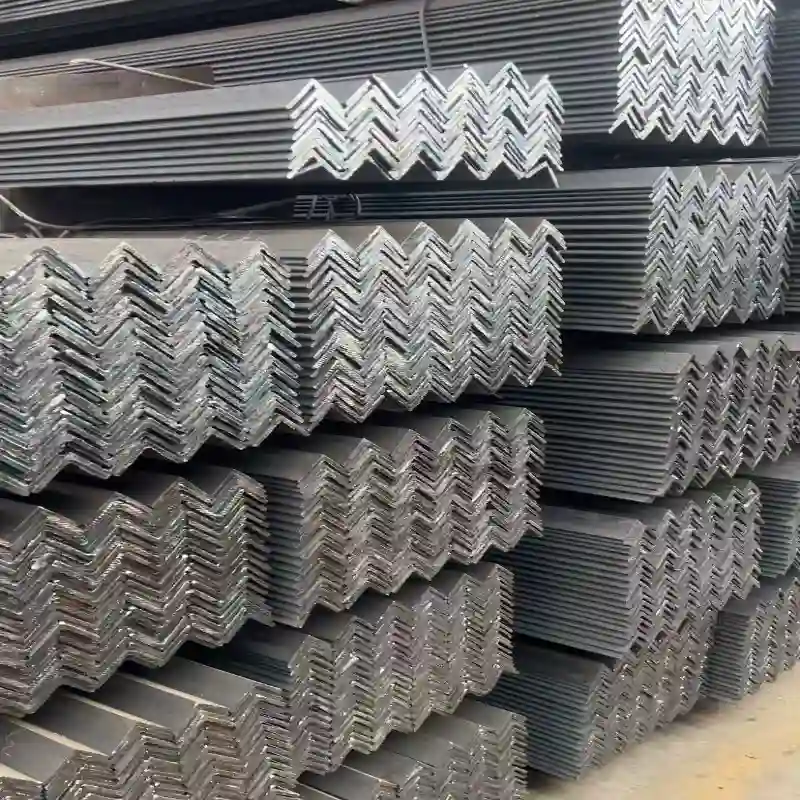
Table of Contents
- What Is CARBON STEEL STRUCTURAL ANGLE BAR?
- Why Choose Carbon Steel Structural Angle Bar?
- What Types and Specifications Are Available?
- Where Is Carbon Steel Structural Angle Bar Used?
- How Should You Select the Right Angle Bar?
- How Is Carbon Steel Structural Angle Bar Manufactured?
- What Quality and Standards Should Buyers Consider?
- What Are the Main Advantages for Global Buyers?
- Frequently Asked Questions
- Conclusion
What Is CARBON STEEL STRUCTURAL ANGLE BAR?
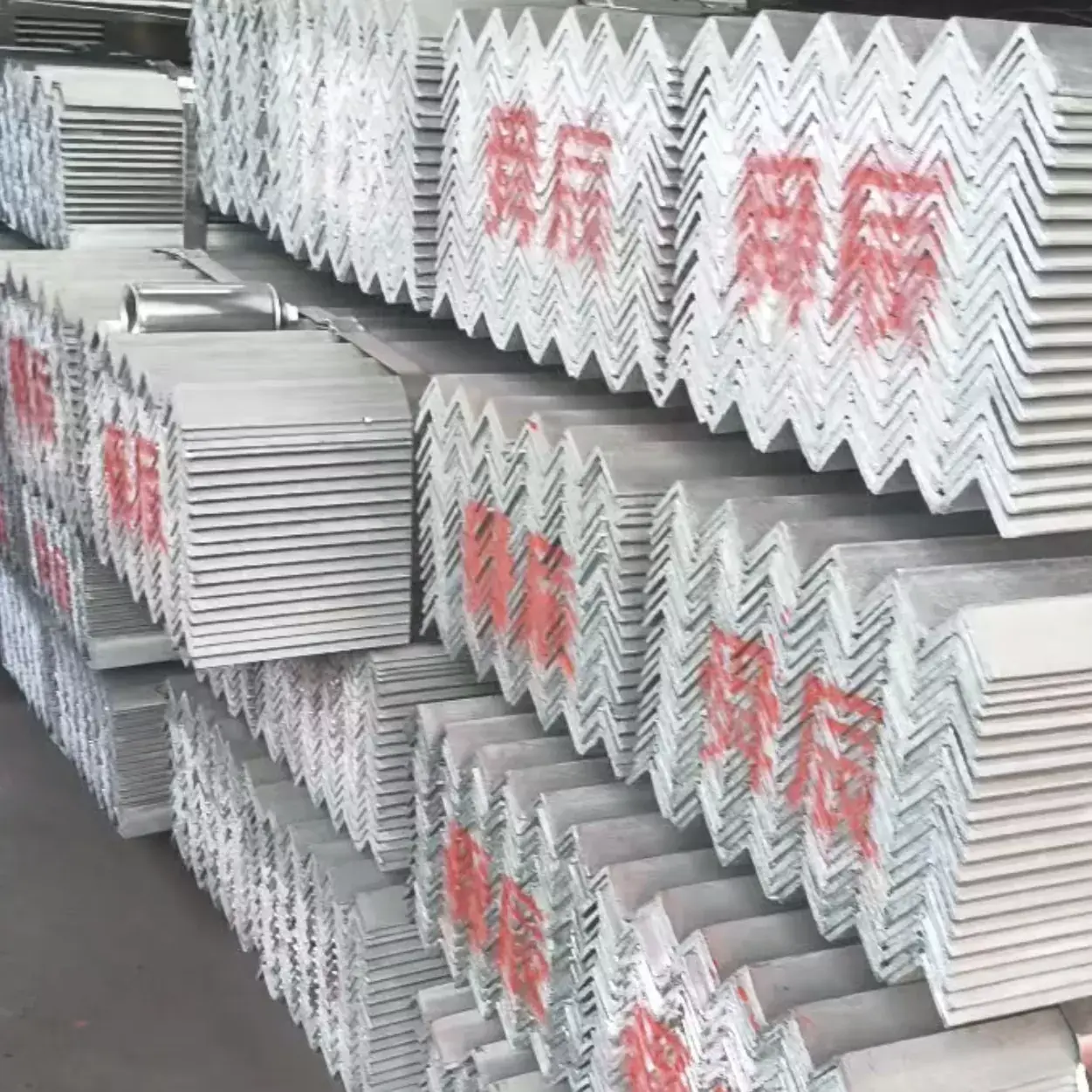
A CARBON STEEL STRUCTURAL ANGLE BAR is a structural steel section featuring an L-shaped profile formed by two legs joined at approximately 90 degrees. It can be manufactured with equal legs, where both sides have the same width, or unequal legs, where one side is longer than the other.
This geometry gives angle steel an efficient combination of rigidity, strength, and relatively low material consumption. It can be used independently as a structural member or combined with plates, channels, beams, tubes, and other steel profiles to create complete structural assemblies.
For engineering buyers, the selection of an angle bar should not be based on size alone. Material grade, thickness, manufacturing method, dimensional tolerance, surface condition, required length, welding requirements, and applicable standards all influence whether a particular section is suitable for a project.
Why Choose Carbon Steel Structural Angle Bar?
The popularity of carbon steel angle bar comes from its ability to satisfy multiple structural requirements while remaining relatively economical. ASTM A36, for example, covers carbon structural steel shapes, plates, and bars intended for applications including welded, bolted, and riveted construction.
Several characteristics make angle bars particularly useful:
- Efficient structural geometry: The L-shaped profile provides useful rigidity for frames, braces, brackets, and supports.
- Good weldability: Suitable grades can be fabricated into larger assemblies through appropriate welding processes.
- Fabrication flexibility: Angle bars can be cut, drilled, punched, welded, and assembled according to project requirements.
- Wide application range: They can be incorporated into buildings, industrial machinery, towers, platforms, racks, and infrastructure.
- Cost efficiency: Carbon steel offers a practical combination of strength, availability, and manufacturing economy.
- Surface treatment options: Coatings such as galvanizing or painting can be considered where additional corrosion protection is required.
For international procurement, working with an experienced China manufacturer can also simplify customization, bulk ordering, dimensional matching, inspection, and documentation.
What Types and Specifications Are Available?
Carbon steel structural angle bars are available in numerous combinations of material grade, leg dimensions, thickness, length, and surface finish. Shunchen's product information identifies Q235B and Q355B options, with equal and unequal configurations and customized cutting services.
| Parameter | Typical Options | Why It Matters |
|---|---|---|
| Profile | Equal Angle / Unequal Angle | Determines geometry and structural orientation |
| Material Grade | Q235B / Q355B and project-specific grades | Influences strength and application suitability |
| Leg Width | Approx. 20–200 mm, depending on product range | Must match design loads and connection requirements |
| Thickness | Approx. 3–24 mm, depending on section | Affects load-bearing capacity, rigidity, and weight |
| Length | 6 m / 9 m / 12 m / Customized | Supports different fabrication and transportation needs |
| Surface | Mill Finish / Oiled / Galvanized / Coated | Helps address storage and corrosion-protection requirements |
| Inspection | Mill Test Certificate / Third-Party Inspection | Provides traceability and quality verification |
Exact dimensions and mechanical properties should always be confirmed against the applicable product standard and project specification rather than relying only on general industry ranges.
Where Is Carbon Steel Structural Angle Bar Used?
The versatility of angle steel makes it suitable for both primary and secondary structural applications. Its L-profile is especially convenient when designers need a compact member that can be connected to another component through welding, bolting, or mechanical fastening.
Common applications include:
- Building structures: Secondary framing, supports, bracing, and connection assemblies.
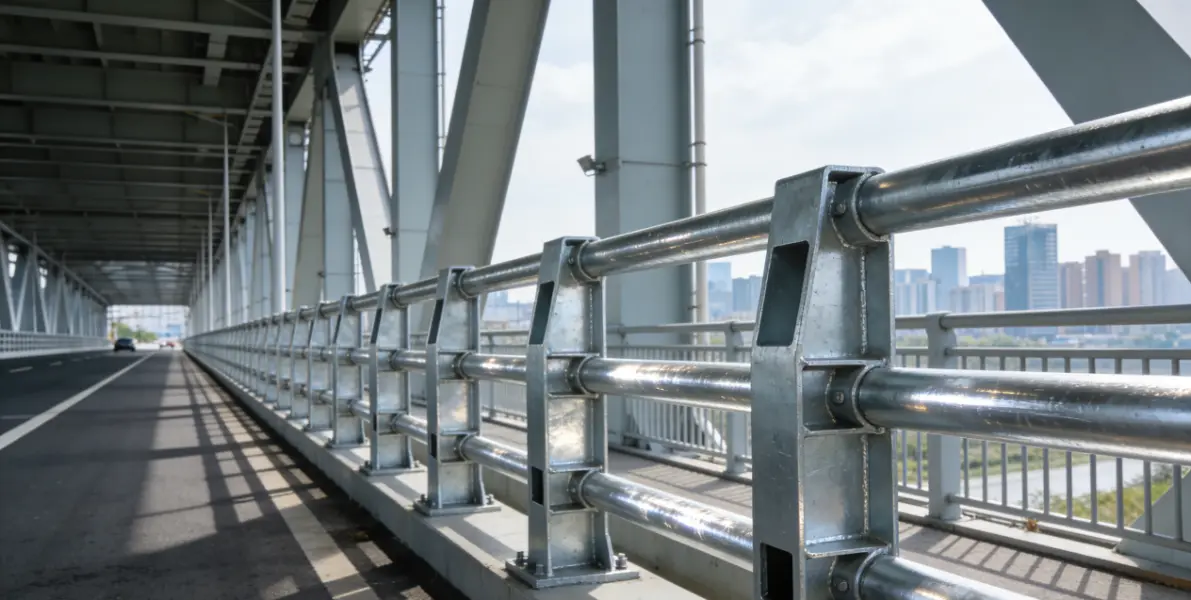
- Bridge and infrastructure projects: Structural members and supporting components where the specified grade and standard are suitable.
- Industrial machinery: Equipment frames, machine bases, support structures, and conveyor components.
- Steel towers: Tower legs, bracing systems, transmission structures, and related assemblies.
- Storage systems: Shelving supports, racks, brackets, and warehouse structures.
- Platforms and walkways: Frames, supports, handrail-related structures, and industrial access systems.
- Fabricated components: Brackets, reinforcement members, frames, and custom steel assemblies.
For heavy infrastructure applications, the required steel specification may involve additional requirements for mechanical properties, impact performance, corrosion resistance, or inspection. ASTM A709/A709M, for instance, addresses structural steel for bridges and includes carbon and high-strength low-alloy structural shapes, plates, and bars.
How Should You Select the Right Angle Bar?
Choosing the correct angle bar requires more than simply selecting the largest available section. A professional purchasing process should begin with engineering requirements and then translate those requirements into a suitable steel specification.
- Determine the load conditions. Identify whether the angle will carry tension, compression, bending, shear, or a combination of loads.
- Select the material grade. Confirm the required yield strength, tensile strength, ductility, and weldability.
- Choose equal or unequal legs. Equal angles work well for symmetrical applications, while unequal angles can provide more efficient directional support.
- Confirm dimensions. Select leg width and thickness according to structural calculations and connection design.
- Define the required length. Standard lengths can reduce processing costs, while cut-to-length supply can minimize fabrication waste.
- Specify the surface treatment. Consider galvanized, painted, or other protective finishes when the operating environment demands additional corrosion resistance.
- Confirm inspection documents. For international projects, request material certificates and inspection documentation appropriate to the contract.
Engineers should always verify section properties and structural capacity using the applicable design code and project calculations.
How Is Carbon Steel Structural Angle Bar Manufactured?
Hot rolling is a common production method for structural angle steel. During manufacturing, steel is heated and passed through forming rolls that progressively create the required L-shaped cross-section. Subsequent straightening and dimensional inspection help achieve the specified geometry.
A professional manufacturing workflow may include:
- Raw material selection and heat identification
- Heating and hot rolling
- Controlled forming of equal or unequal angle profiles
- Cooling and straightening
- Dimensional and visual inspection
- Cutting to standard or customized lengths
- Surface treatment when required
- Mechanical and chemical verification
- Final inspection, marking, packing, and shipment
Shunchen describes its angle bar production as using automated hot rolling and precision straightening, while offering customized length cutting and traceability documentation for international buyers.
What Quality and Standards Should Buyers Consider?
Standards are particularly important when purchasing structural steel internationally because similar-looking products may have substantially different chemical, mechanical, dimensional, or testing requirements.
Depending on the destination market and engineering specification, buyers may encounter standards such as ASTM, EN, ISO, DIN, and relevant national standards. ASTM A36/A36M is one example of a specification covering carbon structural steel shapes, plates, and bars for general structural applications.
When evaluating a supplier, consider asking for:
- Material grade and applicable standard
- Chemical composition information
- Yield and tensile strength data
- Dimensional tolerance requirements
- Mill Test Certificate (MTC)
- Heat or batch traceability
- Third-party inspection when required
- Surface-treatment specifications
- Packaging and shipping information
These documents can help purchasing teams, engineers, and quality departments verify whether the supplied material matches the project specification before fabrication begins.
What Are the Main Advantages for Global Buyers?
For construction companies, steel fabricators, distributors, and machinery manufacturers, purchasing directly from a qualified structural steel supplier can provide several practical benefits.
| Buyer Requirement | Potential Benefit |
|---|---|
| Bulk Procurement | Supports large-scale project supply and standardized material sourcing |
| Custom Dimensions | Reduces unnecessary cutting and fabrication work |
| Material Traceability | Helps quality teams verify production batches and documentation |
| Surface Treatment | Provides options for different environmental conditions |
| International Standards | Facilitates specification matching for overseas projects |
| Factory-Direct Supply | Can improve communication, customization, and procurement efficiency |
The most suitable supplier is not necessarily the one offering the lowest initial quotation. Consistent quality, dimensional accuracy, documentation, production capability, delivery reliability, and technical communication can have a much greater impact on the total project cost.
Frequently Asked Questions
What is CARBON STEEL STRUCTURAL ANGLE BAR mainly used for?
It is commonly used for structural frames, supports, braces, towers, machinery bases, racks, platforms, industrial structures, and fabricated steel assemblies. The actual application should be confirmed through engineering calculations and the relevant design standard.
What is the difference between equal and unequal angle bars?
An equal angle has two legs with the same nominal width, while an unequal angle has two different leg widths. Equal angles are convenient for symmetrical structural arrangements, whereas unequal angles can provide greater flexibility when directional support or connection geometry is important.
Can carbon steel angle bars be galvanized?
Yes. Hot-dip galvanizing is a common corrosion-protection option for suitable carbon steel components. The required coating specification should be agreed upon according to the project environment and applicable standard.
What information should I provide when requesting a quotation?
A useful inquiry should include material grade, applicable standard, equal or unequal profile, leg dimensions, thickness, quantity, required lengths, surface treatment, inspection requirements, destination port, and any special packaging requirements.
Why should buyers work with an experienced structural steel manufacturer?
An experienced manufacturer can help coordinate material selection, dimensional customization, production inspection, documentation, packaging, and bulk shipment. This is particularly valuable when the project has strict technical or international procurement requirements.
Conclusion
CARBON STEEL STRUCTURAL ANGLE BAR remains an important choice for construction, infrastructure, machinery, fabrication, and industrial engineering because its L-shaped geometry combines structural efficiency, fabrication flexibility, and cost-effectiveness. The right product, however, must be selected according to load requirements, material grade, dimensions, applicable standards, surface conditions, and quality documentation.
For buyers looking for dependable China factory supply, Shunchen provides Q235B and Q355B angle steel options, equal and unequal profiles, customized lengths, surface-treatment choices, and material traceability for global structural steel applications. If you are planning a new construction, infrastructure, machinery, or fabrication project, contact us to discuss your required specifications, quantities, standards, and delivery requirements and receive a tailored quotation.
Related News
- Which Structural Differences Matter When Comparing T-Shaped Steel with Angle Steel?
- How Do Hot Rolled and Welded T-Shaped Steel Profiles Differ in Manufacturing and Performance?
- Why Is Octagonal Steel a Core Material for Multiple Industries?
- What Are the Common Lengths Available for Steel Channels?
- How Does Hot-Dip Galvanizing Protect Steel Channels?
- What makes Angle Steel the go-to material for industrial plant maintenance?
Leave me a message