What makes Angle Steel the go-to material for industrial plant maintenance?
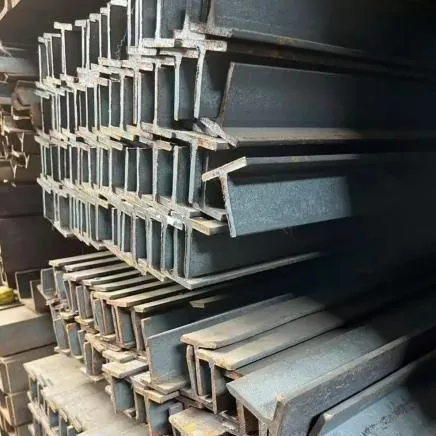
Walking through any industrial plant, a keen observer will notice a familiar silhouette repeated in countless applications: the distinctive L-shape of angle steel. It supports pipe racks, frames access platforms, braces storage systems, and reinforces structural openings. Despite its simple geometry, angle steel has become the default material for plant maintenance and infrastructure projects across virtually every industry sector. The question is not why it is used, but rather what makes it so consistently preferred over other structural shapes.
The answer lies in a combination of structural efficiency, installation flexibility, material availability, and cost-effectiveness that is difficult to match. Angle steel provides a high strength-to-weight ratio in multiple load orientations, can be connected using simple welding or bolting techniques, and is manufactured to precise dimensional standards that ensure compatibility across suppliers. This article examines the technical characteristics that make angle steel the go-to material for industrial plant maintenance, analyzing its structural properties, material specifications, application versatility, economic advantages, and implementation considerations for plant engineers and maintenance managers.

Table of Contents
- 1. Structural Properties and Load-Bearing Performance
- 2. Material Specifications and Manufacturing Standards
- 3. Application Versatility in Plant Infrastructure
- 4. Installation and Joining Methods
- 5. Cost-Effectiveness and Lifecycle Value
- 6. Frequently Asked Questions (FAQ)
- 7. Conclusion
1. Structural Properties and Load-Bearing Performance
The fundamental advantage of angle steel lies in its geometry. The L-shaped cross-section provides bending resistance in two planes simultaneously, making it efficient for resisting both vertical and horizontal loads. A standard equal angle steel section, with legs of equal length, offers the same section modulus in both the X and Y axes. This symmetry simplifies structural calculations and ensures predictable performance regardless of load direction. Unequal angle steel, with legs of different lengths, provides optimized strength when loads are predominantly in one direction.
The load-bearing capacity of angle steel is determined by several key parameters: the leg length (size), the material thickness (gauge), and the grade of steel used. The table below provides typical structural properties for common angle steel sections used in industrial maintenance applications.
| Size (mm) | Thickness (mm) | Weight (kg/m) | Area (cm²) | Ix (cm⁴) | Iy (cm⁴) | Section Modulus (cm³) |
| 40 x 40 | 4 | 2.42 | 3.08 | 5.29 | 5.29 | 2.12 |
| 50 x 50 | 5 | 3.77 | 4.80 | 11.5 | 11.5 | 3.85 |
| 63 x 63 | 6 | 5.72 | 7.29 | 25.5 | 25.5 | 7.43 |
| 75 x 75 | 8 | 9.03 | 11.5 | 50.2 | 50.2 | 12.3 |
| 90 x 90 | 8 | 10.9 | 13.9 | 91.4 | 91.4 | 18.6 |
| 100 x 100 | 10 | 15.1 | 19.2 | 176 | 176 | 32.0 |
In addition to standard static loads, angle steel demonstrates favorable behavior under dynamic and impact loading conditions. The symmetrical cross-section distributes stresses evenly, reducing the risk of stress concentration and fatigue cracking. This is particularly important in plant environments where vibration from rotating equipment, material handling, or thermal expansion can induce cyclic loading on structural members. The ductility of structural steel grades (typically ASTM A36 or equivalent) allows angle steel to absorb energy through plastic deformation before failure, providing a safety margin in overload conditions. At Tianjin Shunchen Hongye Enterprise Management Co., Ltd., we supply angle steel that meets these structural requirements, with material certification and traceability to support engineering verification.
2. Material Specifications and Manufacturing Standards
The reliability of angle steel in industrial applications depends on adherence to established material specifications and manufacturing standards. These standards define the chemical composition, mechanical properties, dimensional tolerances, and quality assurance procedures that ensure consistent performance from batch to batch. For industrial plant maintenance, the most commonly referenced standards are ASTM A36 (USA), EN 10025 (Europe), and JIS G3192 (Japan), along with regional equivalents.
ASTM A36 is the most widely used structural steel specification for angle steel applications in North America. It specifies minimum yield strength of 36,000 psi (250 MPa) and tensile strength of 58,000-80,000 psi (400-550 MPa). The material is weldable and suitable for hot-dip galvanizing, making it adaptable to various installation and protection requirements. EN 10025 includes multiple grades, with S235JR and S355JR being common for industrial applications. S355JR provides higher strength (355 MPa yield) and is preferred for heavier-duty applications.
The table below summarizes the key material properties of common angle steel grades:
| Parameter | ASTM A36 | EN 10025 S235JR | EN 10025 S355JR | JIS G3192 SS400 |
| Min. Yield Strength (MPa) | 250 | 235 | 355 | 245 |
| Tensile Strength (MPa) | 400-550 | 360-510 | 470-630 | 400-510 |
| Elongation (%) | 20 | 24 | 22 | 21 |
| Carbon Equivalent (CE) | 0.28 | 0.35 | 0.44 | 0.36 |
| Weldability | Excellent | Good | Good (preheat may be required) | Good |
| Galvanizing Suitability | Excellent | Excellent | Good | Excellent |
The manufacturing process for angle steel is a significant factor in its quality and performance. Hot rolling is the predominant method for producing angle steel, where the steel billet is heated to approximately 1200°C and passed through a sequence of rollers that progressively form the L-shaped cross-section. This process aligns the grain structure of the steel, improving strength and toughness in the critical load-bearing directions. The rolling process also produces a consistent surface finish with minimal variation in thickness and leg length, meeting the dimensional tolerances specified by the relevant standard.
Quality assurance measures for angle steel include dimensional inspection (measuring leg length, thickness, and squareness), tensile testing (for yield and ultimate strength), and bend testing (to verify ductility). Non-destructive testing, such as ultrasonic inspection or magnetic particle inspection, may be applied for critical applications. Our factory at Tianjin Shunchen Hongye Enterprise Management Co., Ltd. maintains a quality management system aligned with ISO 9001 standards, with material certification and traceability for all angle steel supplied for industrial plant maintenance applications.
3. Application Versatility in Plant Infrastructure
The true value of angle steel in industrial plant maintenance is revealed through the breadth of its applications. Few structural materials can match its combination of versatility and performance across such a wide spectrum of uses. In a typical industrial facility, angle steel can be found in every functional area, serving structural, support, and protective roles.
Structural Framing and Bracing: Angle steel forms the backbone of many plant structures. It is used for the construction of mezzanine floors, equipment platforms, and maintenance access walkways. In these applications, angle steel beams support the floor loads while the same material provides lateral bracing to stabilize the structure. The ability to use the same profile for both primary beams and secondary bracing simplifies material procurement and inventory management. The table below illustrates the load capacity of angle steel as a beam for typical plant applications.
| Span (m) | Angle Steel Size (mm) | Max Uniform Load (kN) | Deflection (mm) | Application |
| 1.5 | 63 x 63 x 6 | 22.5 | 2.1 | Walkway beams |
| 2.0 | 75 x 75 x 8 | 28.0 | 3.2 | Equipment support |
| 2.5 | 90 x 90 x 8 | 34.0 | 4.5 | Platform framing |
| 3.0 | 100 x 100 x 10 | 41.0 | 6.0 | Light gantry beams |
| 4.0 | 120 x 120 x 12 | 52.0 | 8.8 | Heavy equipment supports |
Conveyor and Pipe Support Systems: Angle steel is the standard material for constructing pipe racks, conveyor supports, and cable trays. In these applications, angle steel provides the precise geometric alignment required for supporting long runs of pipes or conveyors while accommodating the necessary spacing between supports. The angle steel sections are cut to size, drilled for bolted connections, and welded as required to form the support structure. The use of angle steel ensures a strong, stable, and vibration-resistant support system for critical process infrastructure.
Storage Racking and Workstations: Angle steel is the preferred material for constructing heavy-duty storage racks, workstations, and maintenance benches. The strength and stability of angle steel allow for the construction of racking systems that can support heavy loads while remaining dimensionally stable over time. The bolted connection system used in angle steel racking allows for easy adjustment and reconfiguration as storage requirements change.
Guardrails and Safety Barriers: In plant environments, safety is paramount. Angle steel is used extensively for the construction of guardrails, handrails, and machine guarding. The strength of angle steel provides a robust physical barrier that can withstand impact loads, while the geometric simplicity of the L-shape makes it easy to fabricate into any required configuration. The availability of pre-galvanized angle steel simplifies the construction of corrosion-resistant safety systems.
Temporary Structures and Supports: Angle steel is frequently used to construct temporary supports, shoring systems, and scaffolding during plant repairs and upgrades. The material can be quickly assembled using bolted connections, and the connections can be easily disassembled for reuse. This reusability makes angle steel a cost-effective solution for temporary infrastructure needs.
At Tianjin Shunchen Hongye Enterprise Management Co., Ltd., we supply angle steel in a comprehensive range of sizes and grades to support all of these applications. Our stock includes both equal and unequal angle steel, in lengths up to 12 meters, with options for pre-galvanized or hot-dip galvanized finishes. This ensures that our customers can obtain the required material for any plant maintenance project from a single, reliable source.
4. Installation and Joining Methods
The practical advantage of angle steel is significantly enhanced by the simplicity and versatility of its joining methods. The L-shaped cross-section provides a flat, accessible surface on both legs, making it straightforward to create structural connections using either bolting or welding. This ease of joining reduces installation time, minimizes the need for specialized tooling, and allows for flexibility in field adjustments.
Bolted Connections: Bolted connections are the most common joining method for angle steel in plant maintenance applications. The leg of the angle steel provides a flat surface for the bolt head and nut, and the geometry of the L-shape allows for simple lapped connections. The following are the primary types of bolted connections used with angle steel:
- Lap Joint: Two sections of angle steel are placed side-by-side and bolted together. This is the simplest and most common connection, used for extending lengths or connecting to other members.
- Butt Joint with Splice Plate: A flat plate (often a section of flat steel) is placed across the joint and bolted to both sections. This provides a stronger connection than a simple lap joint.
- Gusset Plate Connection: A flat plate is used to connect multiple members at a joint. This is common in roof trusses and structural frames.
The choice of bolt type and size is determined by the required load capacity and the thickness of the angle steel. Standard high-strength structural bolts (ASTM A325 or equivalent) are typically used, with diameters ranging from M10 to M24 for most industrial applications. The following table provides typical bolt sizes for different angle steel thicknesses:
| Angle Steel Thickness (mm) | Recommended Bolt Diameter | Bolt Grade | Hole Diameter (mm) | Typical Application |
| 3-5 mm | M8 or M10 | 8.8 | 9-11 | Light brackets, guards |
| 6-8 mm | M12 or M16 | 8.8 or 10.9 | 13-18 | Support frames, walkways |
| 10-12 mm | M16 or M20 | 10.9 | 18-22 | Heavy equipment supports |
| > 12 mm | M20 or M24 | 10.9 | 22-26 | Structural framing |
Welded Connections: Welding is the preferred joining method for permanent, high-strength connections where structural integrity is critical. The flat surfaces of angle steel provide an ideal platform for fillet welds, and the geometry allows for both lap and butt welds. The selection of the appropriate welding process depends on the material thickness and the required weld quality. Common processes for angle steel include Shielded Metal Arc Welding (SMAW), Gas Metal Arc Welding (GMAW), and Flux-Cored Arc Welding (FCAW). The advantages of welded connections include higher strength (the connection is as strong as the base metal), improved aesthetics (no protruding bolt heads), and better resistance to vibration loosening.
Installation Considerations: For either bolted or welded connections, the following factors should be considered:
- Hole Alignment: Holes should be accurately positioned to avoid stress on bolts. Templates or jigs are recommended for multiple connections.
- Bolting Torque: Bolts should be tightened to the specified torque using a torque wrench or calibrated tool. Over-tightening can cause bolt failure or damage to the angle steel.
- Weld Preparation: The surfaces to be welded must be clean and free of rust, paint, and contaminants to ensure a sound weld.
- Field Adjustments: Slotted holes can be used to allow for minor field adjustments during installation.
The combination of bolting and welding flexibility means that angle steel can be erected quickly and economically, with minimal training for installation crews. This is a key factor in its widespread use in plant maintenance, where speed of installation is often critical to minimizing downtime. At Tianjin Shunchen Hongye Enterprise Management Co., Ltd., we provide angle steel with pre-punched holes or custom fabrication to reduce on-site labor and speed installation.
5. Cost-Effectiveness and Lifecycle Value
The widespread use of angle steel in industrial plant maintenance is not just a matter of structural performance; it is also a matter of economics. The cost-effectiveness of angle steel is demonstrated across the entire lifecycle of the material, from procurement and fabrication through installation and maintenance. The combination of low material cost, high availability, ease of fabrication, and long service life provides a compelling economic case for its use.
Material Cost: Angle steel is one of the least expensive structural steel products on a per-kilogram basis. The simple rolling process used for its manufacture results in lower production costs compared to more complex shapes. The low material cost means that angle steel can be used in a variety of applications without requiring premium budgets. The following table provides a comparative cost analysis of angle steel versus other common structural materials for typical plant applications:
| Material | Relative Cost per Unit Weight | Fabrication Cost | Installation Speed | Lifecycle Cost | Overall Cost-Effectiveness |
| Angle Steel (ASTM A36) | Low | Low | Fast | Low | High |
| Channel Steel | Medium | Medium | Fast | Medium | Medium |
| I-Beam | Medium | Medium | Moderate | Medium | Medium |
| Aluminum Structural | High | Medium | Fast | Low | Medium |
Availability and Procurement: Angle steel is available from virtually every steel supplier and is manufactured in a wide range of sizes and grades. This ready availability means that plant maintenance projects can be scheduled and executed without long lead times. The standardization of angle steel dimensions and grades simplifies procurement, allowing for direct ordering from stock.
Fabrication Efficiency: The simplicity of angle steel fabrication is a major cost advantage. Cutting angle steel can be performed with standard sawing or shearing equipment. Drilling holes for bolted connections is straightforward, and the flat surfaces of the legs simplify welding. The low fabrication cost and speed contribute to reduced overall project cost.
Long Service Life: When properly protected, angle steel can provide decades of service in industrial environments. With appropriate corrosion protection (paint, galvanizing, or epoxy coating), angle steel resists degradation from moisture, chemicals, and environmental exposure. The service life of angle steel in an industrial plant can be extended through regular inspection and maintenance.
Recyclability: At the end of its service life, angle steel is fully recyclable. The scrap value of steel provides an additional economic benefit, and the use of recycled steel in the production of new angle steel contributes to the circular economy. The recyclability of angle steel is an important consideration for plant maintenance projects that generate significant demolition waste.
For plant engineers and maintenance managers, the cost-effectiveness of angle steel translates to a lower total cost of ownership for maintenance projects. The combination of low material cost, easy fabrication, fast installation, and long service life ensures that angle steel provides the best value over the lifecycle of the project. At Tianjin Shunchen Hongye Enterprise Management Co., Ltd., we source our angle steel from integrated steel mills with efficient production processes, ensuring competitive pricing while maintaining the quality required for industrial applications.
6. Frequently Asked Questions (FAQ)
Question 1: What is the difference between equal and unequal angle steel?
Answer: Equal angle steel has legs of equal length (e.g., 50mm x 50mm), providing symmetrical strength in both axes. Unequal angle steel has legs of different lengths (e.g., 75mm x 50mm), which is used when loads are primarily in one direction. For industrial plant maintenance, equal angle steel is generally preferred due to its versatility and availability. Unequal angle steel is typically used in specialized applications where load orientation is fixed.
Question 2: How do I determine the correct angle steel size for a support structure?
Answer: The correct size depends on the load to be supported, the span, and the required safety factor. The structural capacity of angle steel is determined by its section modulus, which is a function of the leg length and thickness. The process involves calculating the expected load, selecting a size that provides sufficient section modulus, and verifying deflection. For typical plant maintenance applications, a conservative approach is to select the next size up from the calculated minimum. Many engineers also consult the steel supplier's load tables for guidance. Our team at Tianjin Shunchen Hongye Enterprise Management Co., Ltd. can provide structural specifications and assist with sizing calculations.
Question 3: Can angle steel be used in outdoor applications without rusting?
Answer: Yes, but it requires appropriate corrosion protection. For outdoor applications, angle steel should be hot-dip galvanized or coated with a high-performance paint system. Hot-dip galvanizing provides the most effective corrosion protection, with a lifespan of 30-50 years in most atmospheric conditions. Stainless steel angle steel is also available for highly corrosive environments, but it is significantly more expensive than standard carbon steel.
Question 4: What are the maximum typical lengths for angle steel sections?
Answer: Standard angle steel sections are available in lengths up to 12 meters, which is the typical maximum length for rolling mills. For longer spans, sections can be spliced together using lap joints or splice plates. For applications requiring longer continuous lengths, custom lengths can be ordered from the mill.
Question 5: Can angle steel be bent to form curved structures?
Answer: Yes, angle steel can be bent to form curved sections, but this is a specialized process. Hot bending is typically required to achieve tight radii without cracking or weakening the material. The bending process must be carefully controlled to avoid work hardening and stress concentration. For most plant maintenance applications, straight sections of angle steel are preferred due to cost and availability.
7. Conclusion
Angle steel has earned its position as the go-to material for industrial plant maintenance through a combination of structural efficiency, material versatility, and economic value. Its simple L-shaped cross-section provides excellent load-bearing capacity in multiple directions, while its availability in a wide range of sizes and grades simplifies procurement and specification. The ease of connecting angle steel through welding or bolting enables fast installation, reducing project timelines and minimizing plant downtime. The cost-effectiveness of angle steel is demonstrated through low material cost, efficient fabrication, and long service life, providing the best lifecycle value for maintenance projects.
The advantages of angle steel are not limited to its technical properties. Its widespread availability, standardization, and compatibility with existing plant infrastructure make it the logical choice for the majority of maintenance and repair projects. The material's versatility ensures that it can address a wide range of application needs—from structural framing to equipment support to safety systems.
At Tianjin Shunchen Hongye Enterprise Management Co., Ltd., we supply angle steel to industrial clients across multiple sectors, providing material certification, technical support, and competitive pricing. Our team is available to assist with material selection, sizing, and project planning. For any industrial plant maintenance project, angle steel offers a proven, reliable, and cost-effective solution.
Contact Tianjin Shunchen Hongye Enterprise Management Co., Ltd. for angle steel specifications, availability, and technical support for your plant maintenance projects.
Next :
-
Related News
- Why Is Hot Dip Galvanized Grating Important for Modern Industry?
- What makes Angle Steel the top choice for transmission tower construction?
- Why Is CARBON STEEL STRUCTURAL ANGLE BAR a Smart Choice for Modern Structural Projects
- How Can Reinforced Concrete Steel Wire Deliver Stronger, More Durable, and More Reliable Concrete Structures
- How Can GALVANIZED STEEL GRATING Provide Superior Strength, Safety, and Long-Term Value for Modern Industrial Applications
- Why Is PC STEEL STRAND Becoming the Preferred Choice for Modern Prestressed Concrete Applications
Leave me a message