How Can Reinforced Concrete Steel Wire Deliver Stronger, More Durable, and More Reliable Concrete Structures
Article Summary: Reinforced Concrete Steel Wire plays an essential role in improving the tensile performance, crack resistance, stability, and service durability of concrete structures. As a professional steel material supplier, Shunchen provides reinforcement wire solutions with different surface treatments and specification options for buildings, bridges, precast concrete, industrial facilities, and infrastructure projects. This guide explains how the material works, its major benefits, surface options, applications, selection considerations, and quality-control factors.
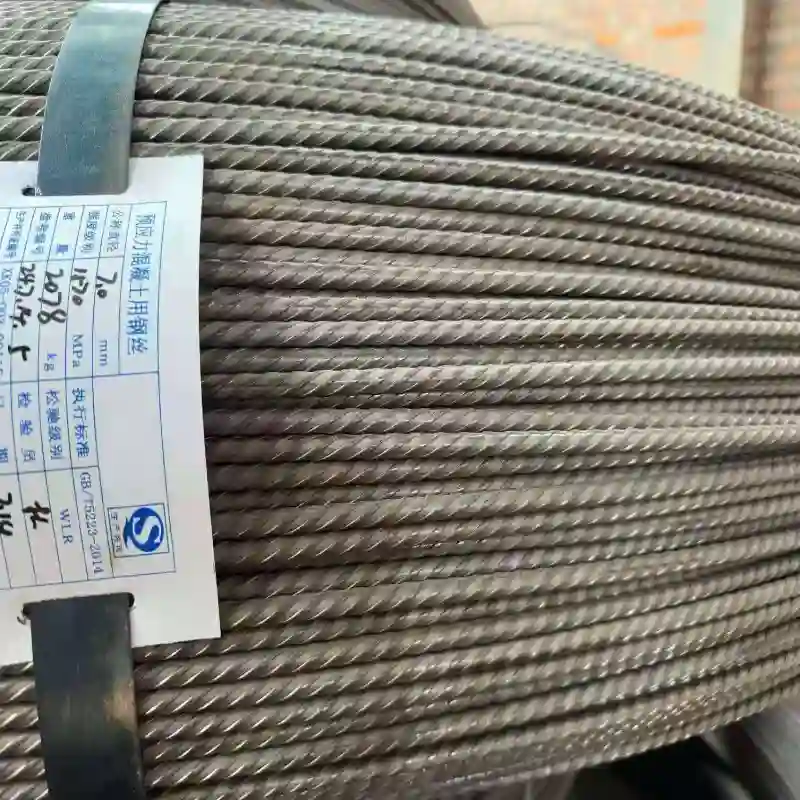
Table of Contents
- What Is Reinforced Concrete Steel Wire?
- Why Is Reinforced Concrete Steel Wire Important?
- What Are the Key Benefits?
- Which Surface Option Should You Choose?
- Where Is It Used?
- How Should You Select the Right Product?
- How Does Manufacturing Quality Affect Performance?
- How Does It Compare with General Steel Wire?
- Frequently Asked Questions
- Why Choose Shunchen for Reinforcement Wire?
What Is Reinforced Concrete Steel Wire?
Reinforced Concrete Steel Wire is a steel reinforcement material specifically designed to work together with concrete in structural and construction applications. Concrete performs particularly well under compression, but it has comparatively limited tensile capacity. Steel reinforcement helps compensate for this limitation by providing additional tensile support and helping concrete structures withstand loading, cracking, and long-term structural stress.
Shunchen manufactures reinforcement wire using controlled steel processing and professional manufacturing procedures. According to project requirements, different surface treatments and specification categories can be selected to achieve appropriate bonding, durability, processing performance, and environmental adaptability.
Unlike ordinary steel wire intended for general industrial or binding purposes, concrete reinforcement wire is selected according to structural requirements. Its mechanical properties, dimensions, surface characteristics, and interaction with concrete all contribute to the performance of the finished structure.
Why Is Reinforced Concrete Steel Wire Important?
The effectiveness of a reinforced concrete structure depends on how well the concrete and reinforcement work as a composite system. Steel wire provides tensile support while concrete handles compressive forces. When correctly designed and installed, this combination can improve structural reliability and service performance.
The main contributions of reinforcement wire include:
- Improved tensile capacity: Steel reinforcement helps concrete resist tensile forces that concrete alone cannot efficiently handle.
- Crack control: Proper reinforcement distribution can help control cracking associated with structural stress and loading.
- Structural stability: Reinforcement contributes to the stability of concrete components under different loading conditions.
- Long-term performance: Suitable steel reinforcement supports durable concrete construction when appropriately specified for the service environment.
- Reliable steel-concrete interaction: Surface characteristics influence the mechanical connection between reinforcement and concrete.
For this reason, selecting reinforcement material should be treated as an engineering decision rather than simply a purchasing decision.
What Are the Key Benefits of Reinforced Concrete Steel Wire?
High Tensile Performance
High-strength steel reinforcement provides additional tensile support to concrete components. This is especially valuable in structural elements exposed to continuous or changing loads, including building components, bridge structures, and infrastructure applications.
Effective Concrete Bonding
The interface between steel and concrete is critical to composite structural performance. Indented surface designs can improve mechanical interaction with concrete, helping reduce unwanted movement at the interface when the structure is subjected to stress.
Flexible Surface Solutions
Different projects face different environmental and construction conditions. Shunchen offers plain, indented, and galvanized surface options so buyers can match the reinforcement material with project requirements.
Consistent Manufacturing Quality
Reliable reinforcement begins with appropriate raw materials and controlled processing. Wire drawing, dimensional control, surface treatment, inspection, and finished-product verification all contribute to consistent product quality.
| Performance Factor | Contribution to Concrete Structures | Typical Project Value |
|---|---|---|
| Tensile Performance | Provides additional tensile support | Improved structural reliability |
| Concrete Bonding | Enhances interaction between steel and concrete | More stable composite behavior |
| Corrosion Protection | Galvanized surface provides additional protection | Suitable for moisture-exposed environments |
| Dimensional Consistency | Supports predictable fabrication and installation | Better construction efficiency |
Which Surface Option Should You Choose?
Surface selection is an important part of reinforcement specification because the interface between steel and concrete affects structural performance and environmental durability.
| Surface Type | Main Characteristics | Recommended Applications |
|---|---|---|
| Plain Surface | Smooth surface with convenient processing characteristics | General indoor concrete reinforcement |
| Indented Surface | Improved mechanical bonding with concrete | Structures requiring stronger steel-concrete interaction |
| Galvanized Surface | Additional corrosion protection | Humid, coastal, and corrosion-sensitive environments |
For standard construction projects, a plain surface may provide practical performance. Where concrete bonding is a major consideration, an indented surface can be more appropriate. For projects exposed to moisture or corrosive conditions, galvanized reinforcement can provide an additional protective layer.
Where Is Reinforced Concrete Steel Wire Used?
The versatility of reinforcement wire makes it suitable for a broad range of construction and infrastructure projects.
Building Construction
- Concrete floor reinforcement
- High-rise building structural components
- Industrial building reinforcement
- General reinforced concrete construction
Bridges and Infrastructure
- Bridge beam reinforcement
- Municipal viaduct construction
- Transportation infrastructure
- Large-scale concrete structures
Precast Concrete Manufacturing
- Precast hollow slabs
- Factory-produced concrete components
- Concrete elements requiring additional tensile support
- Standardized precast construction products
Moisture-Exposed and Coastal Projects
Construction projects near coastlines or in persistently humid environments require careful consideration of corrosion protection. Galvanized surface options can provide additional protection and may be considered where environmental exposure creates greater corrosion concerns.
How Should You Select the Right Reinforced Concrete Steel Wire?
Choosing the right reinforcement wire should start with the engineering requirements of the project. Purchasing teams, contractors, and engineers should evaluate several factors instead of focusing only on unit price.
- Structural requirements: Determine the required reinforcement performance based on engineering design and expected loads.
- Concrete bonding: Consider whether a plain or indented surface is more appropriate for the intended application.
- Environmental exposure: Evaluate humidity, coastal conditions, and potential corrosive exposure.
- Specification: Select a wire category suitable for the size, weight, and structural requirements of the concrete component.
- Processing requirements: Consider handling, cutting, forming, and installation methods used at the construction site or precast facility.
- Supply consistency: For large projects, choose a manufacturer capable of maintaining stable quality across batches.
Shunchen provides different reinforcement solutions according to application conditions, including light, standard, and heavy-duty reinforcement categories. This allows project purchasers to select materials based on actual engineering requirements rather than adopting a one-size-fits-all approach.
How Does Manufacturing Quality Affect Performance?
Reinforcement wire is a structural material, so manufacturing consistency directly affects its suitability for engineering applications. A dependable production process should control the material from raw steel selection through finished-product inspection.
1. Raw Material Inspection
Steel materials should be checked before processing to help maintain consistent chemical and mechanical characteristics. Appropriate wire rod selection provides the foundation for stable finished-product performance.
2. Controlled Wire Processing
Professional wire drawing and stress-control procedures help maintain dimensional consistency and improve manufacturing stability. Process monitoring also helps reduce variations between production batches.
3. Surface Treatment Control
Where indented or galvanized products are required, surface treatment should be controlled carefully. Consistent surface characteristics are important for bonding and environmental protection.
4. Finished Product Verification
Before shipment, finished reinforcement products can be evaluated for mechanical performance, dimensions, appearance, and overall product consistency. Such quality-control practices help construction buyers reduce material-related uncertainty during large-scale projects.
How Does It Compare with General Steel Wire?
| Feature | General Steel Wire | Reinforced Concrete Steel Wire |
|---|---|---|
| Primary Function | General industrial or binding applications | Concrete reinforcement |
| Structural Support | Not primarily designed for structural reinforcement | Provides additional tensile support |
| Concrete Bonding | Standard steel-concrete contact | Available with surface designs optimized for reinforcement |
| Environmental Options | Usually application-dependent | Plain, indented, and galvanized options available |
| Engineering Applications | Broad industrial uses | Buildings, bridges, precast products, and infrastructure |
The key difference is application purpose. Reinforcement wire is developed around the specific requirements of concrete structures, including tensile support, bonding, durability, and long-term structural performance.
Frequently Asked Questions
What is the main purpose of Reinforced Concrete Steel Wire?
Its primary purpose is to provide additional tensile reinforcement to concrete structures. It works together with concrete to improve structural stability, crack control, and resistance to tensile stress.
What is the difference between plain and indented steel wire?
Plain wire has a smooth surface and offers convenient processing characteristics, while indented wire has surface features designed to improve mechanical bonding between the steel and concrete.
When should galvanized reinforcement wire be considered?
Galvanized reinforcement can be considered for projects exposed to moisture, coastal conditions, or environments where additional corrosion protection is required.
Where can reinforced concrete steel wire be used?
Typical applications include buildings, bridges, municipal infrastructure, industrial structures, precast concrete components, and other projects requiring dependable concrete reinforcement.
Can Shunchen provide different reinforcement specifications?
Yes. Shunchen provides different specification categories and surface-treatment options to accommodate different construction conditions, structural requirements, and environmental exposure levels.
Why Choose Shunchen for Reinforcement Wire?
For construction companies and international buyers, choosing the right steel reinforcement supplier is as important as selecting the material itself. Shunchen combines professional steel processing, controlled manufacturing, quality inspection, flexible specification options, and engineering-oriented service to support demanding construction applications.
- Professional experience in steel processing and reinforcement materials
- Controlled manufacturing procedures for consistent quality
- Multiple surface-treatment options
- Flexible solutions for different construction conditions
- Quality inspection from raw material through finished products
- Support for international construction and infrastructure projects
Whether you are sourcing reinforcement wire for a building project, bridge construction, precast concrete production, or a large infrastructure program, selecting a reliable China manufacturer can help improve supply stability and material consistency. If you are looking for dependable Reinforced Concrete Steel Wire with suitable specifications and surface options, contact us at Shunchen to discuss your project requirements and request a professional quotation.
Related News
- How Do Hot Rolled and Welded T-Shaped Steel Profiles Differ in Manufacturing and Performance?
- Why Is Octagonal Steel a Core Material for Multiple Industries?
- What Are the Common Lengths Available for Steel Channels?
- How Does Hot-Dip Galvanizing Protect Steel Channels?
- What makes Angle Steel the go-to material for industrial plant maintenance?
- Why Is Hot Dip Galvanized Grating Important for Modern Industry?
Leave me a message