What makes Angle Steel the top choice for transmission tower construction?
Standing tall against the skyline, electricity transmission towers are the silent backbone of modern civilization. They carry power across vast distances, connecting cities, industries, and homes. These imposing structures are engineering marvels of efficiency and resilience, designed to withstand extreme weather, heavy ice loads, and the relentless force of wind. The choice of material for these towers is not arbitrary; it is a carefully calculated decision that balances strength, weight, cost, and longevity. For over a century, one material has consistently been the top choice for transmission tower construction: angle steel. From the early days of electrification to today's ultra-high-voltage networks, angle steel has proven its reliability in the harshest conditions, from the frozen tundra to the sweltering deserts.
Angle steel, a structural steel shape with an L-shaped cross-section, offers a combination of properties that make it uniquely suited for transmission tower construction. Its high strength-to-weight ratio allows for the design of tall, slender towers that minimize material usage while maximizing structural integrity. Its ability to be bolted or welded enables rapid fabrication and assembly in remote locations. Its durability ensures that these critical infrastructure assets can operate for decades with minimal maintenance. In this article, we will delve into the specific technical, economic, and practical reasons why angle steel remains the unparalleled choice for transmission tower construction. We will explore the material properties, design advantages, manufacturing processes, and logistical considerations that make angle steel the industry standard, providing engineers and project managers with the insights they need to specify the right materials for their next transmission line project.
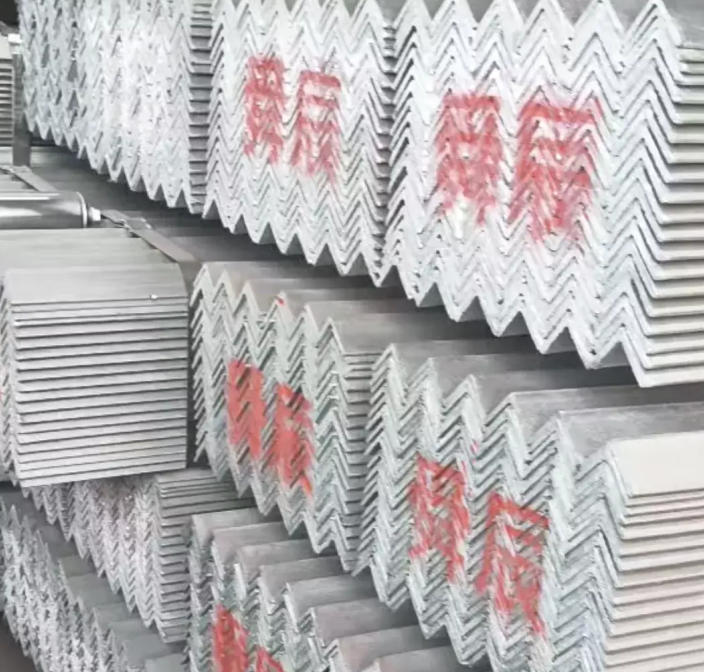
Table of Contents
- 1. What Is Angle Steel and Why Is It Used in Transmission Towers?
- 2. What Structural Properties Make Angle Steel Ideal for Tower Construction?
- 3. How Does Angle Steel Offer Cost Efficiency and Economic Advantages?
- 4. What Role Does Fabrication and Assembly Ease Play in Project Success?
- 5. What Are the Key Technical Specifications for Transmission Tower Angle Steel?
- 6. Frequently Asked Questions (FAQ)
- 7. Conclusion
1. What Is Angle Steel and Why Is It Used in Transmission Towers?
Angle steel, also known as an angle iron or L-bracket, is a structural steel product with a cross-section shaped like the letter "L". It is manufactured by hot rolling or cold forming a steel billet into a 90-degree angle shape. The two legs of the angle are typically of equal or unequal length, with a variety of thicknesses available to meet different load-bearing requirements. The standard shape, equal-leg angle steel, is the most commonly used in transmission tower construction. The L-shaped cross-section provides a high moment of inertia and a high section modulus relative to its weight, making it an exceptionally efficient structural element for resisting bending and torsion forces.
The use of angle steel in transmission tower construction dates back to the late 19th century, when the first long-distance power transmission lines were being built. Early towers were often constructed from wrought iron or cast iron, but these materials were heavy, brittle, and difficult to fabricate. Angle steel, with its high strength-to-weight ratio and ease of fabrication using bolts and rivets, quickly became the material of choice. The introduction of high-strength, low-alloy steels further enhanced the performance of angle steel towers, enabling the construction of taller and longer-span towers.
There are several reasons why angle steel remains the dominant material for transmission tower construction:
- Structural Efficiency: The L-shape provides excellent structural performance in both compression and tension, making it suitable for the diverse load conditions experienced by transmission towers.
- Modularity: Angle steel towers are constructed from standard, modular components that can be easily fabricated in a factory and assembled on site.
- Fastenability: The flat surfaces of angle steel allow for easy bolted or welded connections, simplifying the assembly process and reducing construction time.
- Durability: When properly galvanized, angle steel offers exceptional resistance to corrosion, ensuring a long service life even in harsh environments.
- Cost-Effectiveness: Angle steel is relatively inexpensive to produce and transport, making it an economically viable option for large-scale infrastructure projects.
- Field Repairability: Damage to an angle steel tower can be easily repaired in the field by replacing damaged members or reinforcing existing ones.
At Tianjin Shunchen Hongye Enterprise Management Co., Ltd., we have been supplying high-quality angle steel for transmission tower projects for over a decade. Our factory produces angle steel to the highest standards, ensuring that each piece meets the rigorous requirements of the power transmission industry. We understand that the reliability of the electrical grid depends on the quality of the materials used, and we are committed to delivering angle steel that performs to the highest expectations. Our extensive experience in the industry allows us to provide our customers with the technical support and product knowledge they need to specify the right angle steel for their specific project requirements.
2. What Structural Properties Make Angle Steel Ideal for Tower Construction?
To understand why angle steel is the material of choice for transmission towers, it is essential to examine its structural properties in detail. Transmission towers are subjected to a complex combination of loads: the dead weight of the tower itself, the weight of the conductors and insulators, wind loads on the tower and conductors, ice loads in cold climates, and, in some regions, seismic loads. The tower must be designed to resist these loads without excessive deflection or failure. The structural performance of angle steel is a direct result of its material properties and its geometric shape.
Strength-to-Weight Ratio: The strength-to-weight ratio is a critical factor in structural design. A material with a high strength-to-weight ratio allows for a lighter structure, which reduces the load on the foundation and lowers material costs. Angle steel, particularly when made from high-strength, low-alloy steel, has an excellent strength-to-weight ratio. This is because the L-shaped cross-section provides a high moment of inertia (resistance to bending) and a high section modulus (resistance to stress) for a given weight. This efficiency is a key reason why angle steel is preferred over other structural shapes, such as round bars or flat bars.
Buckling Resistance: Compression members in a tower are vulnerable to buckling, which is a sudden, catastrophic failure that occurs when a slender member is overloaded. The L-shaped cross-section of angle steel provides a high radius of gyration, which is a measure of the member's resistance to buckling. This means that angle steel compression members can be designed with a longer effective length before buckling becomes a concern. The use of double-angle members (two angle steel sections placed back-to-back) further enhances buckling resistance, allowing for even taller and more slender tower designs.
Torsional Resistance: Transmission towers are often subjected to torsional loads caused by uneven wind forces or conductor ice loads. The L-shaped cross-section of angle steel provides a degree of torsional resistance, although it is not as efficient as closed sections. To mitigate torsion, the design of the tower typically incorporates bracing and triangulation.
Local Buckling (Legs): The individual legs of an angle steel can buckle locally under high compressive stress. The width-to-thickness ratio of the legs is carefully controlled to prevent local buckling. Standards such as the American Institute of Steel Construction (AISC) specification provide limits on these ratios to ensure that the member will not fail through local buckling. The width-to-thickness ratio, combined with the material yield strength, determines whether the angle steel will fail by yielding or by local buckling.
Fatigue Resistance: Transmission towers are subjected to cyclic loading from wind and, in some cases, conductor galloping. The fatigue resistance of angle steel is generally good, provided that the connections are properly designed and fabricated. Bolted connections are particularly effective in preventing fatigue cracks, as they distribute the load across multiple bolts.
The table below summarizes the typical mechanical properties of angle steel used for transmission tower construction.
| Property | Typical Value | Importance |
| Yield Strength (MPa) | 235 - 420 | Determines the maximum load before permanent deformation |
| Tensile Strength (MPa) | 360 - 540 | Indicates the maximum load before fracture |
| Elongation at Break (%) | 20 - 25 | Indicates ductility; higher values are better for earthquake and impact resistance |
| Charpy V-Notch Impact (J at -20°C) | > 27 | Measures toughness and resistance to brittle fracture |
| Modulus of Elasticity (GPa) | 200 - 210 | Stiffness of the material; affects deflection under load |
3. How Does Angle Steel Offer Cost Efficiency and Economic Advantages?
The economic advantages of angle steel are a major factor in its dominance of the transmission tower market. It is not just about the price per kilogram; it is about the total cost of the project, which includes material costs, fabrication costs, transportation costs, installation costs, and maintenance costs over the life of the tower. Angle steel offers a favorable balance across all these categories, making it the most economically viable option for large-scale transmission line projects.
Lower Material Cost: Angle steel is produced in large volumes using established manufacturing processes, which keeps the cost per kilogram relatively low. The raw materials (iron ore and scrap steel) are abundant, and the production process is highly efficient. Compared to other structural materials, such as aluminum or composite materials, angle steel offers a significantly lower cost per unit of strength.
Reduced Fabrication and Assembly Costs: The L-shaped cross-section of angle steel makes it easy to fabricate and assemble. Standardization allows for the development of efficient manufacturing processes, reducing the labor required for cutting, drilling, and welding. The use of bolted connections, rather than welded connections, simplifies assembly on site and does not require highly skilled workers for every connection point. This results in faster installation and lower construction costs.
Lower Transportation Costs: Angle steel is relatively dense, but its high strength-to-weight ratio means that a significant amount of material can be packed into a given volume. This reduces the cost of transporting the steel from the factory to the construction site. The modular nature of angle steel towers allows for efficient packing and shipping, minimizing wasted space.
Minimal Maintenance Costs: When properly galvanized, angle steel offers excellent resistance to corrosion, which is one of the primary causes of tower degradation. The hot-dip galvanizing process provides a durable coating that protects the steel for decades. This reduces the need for ongoing maintenance and repairs, which is a significant cost advantage over other materials that require more frequent inspection and maintenance.
Field Repairability: The modular design of angle steel towers allows for easy repairs in the field. If a member is damaged, it can be replaced with a new member without requiring a full tower replacement. This is a major advantage over cast or welded structures, which are difficult to repair once they are installed. This field repairability reduces the overall cost of the project and extends the service life of the tower.
A cost comparison of different structural materials for transmission towers shows the clear economic advantage of angle steel.
| Material | Relative Material Cost | Relative Fabrication & Assembly Cost | Relative Maintenance Cost | Overall Cost Competitiveness |
| Angle Steel | Low | Low | Low | Best |
| Aluminum | Medium | Medium | Very Low | Good, but higher initial cost |
| Concrete | Medium | Medium | High | Poor for high towers |
| Composite Materials | High | High | Medium | Poor for standard applications |
At Tianjin Shunchen Hongye Enterprise Management Co., Ltd., we understand the economic pressures of large-scale infrastructure projects. We work closely with our customers to provide cost-effective angle steel solutions that meet their project budgets without compromising on quality. Our efficient manufacturing processes and extensive inventory enable us to offer competitive pricing and fast delivery. By partnering with us, our customers can achieve significant cost savings on their transmission tower projects.
4. What Role Does Fabrication and Assembly Ease Play in Project Success?
The ease of fabrication and assembly is a critical factor in the success of a transmission line project, especially for projects in remote or difficult-to-access locations. Angle steel towers are designed for efficient fabrication and rapid assembly, which translates to lower costs, faster project completion, and reduced risk of delays.
Fabrication Process: The fabrication of angle steel transmission towers is a highly standardized process. It begins with the cutting of angle steel to the required lengths, followed by drilling holes for connections and, in some cases, welding of subassemblies. The members are then hot-dip galvanized to protect them from corrosion. The galvanizing process is a well-established and cost-effective method for protecting angle steel in outdoor environments. The standardized nature of the process enables high-quality, consistent fabrication.
Bolted Connections: The vast majority of angle steel tower connections are bolted, not welded. This is a deliberate design choice that simplifies both fabrication and assembly. Bolted connections are easier to fabricate, require less specialized equipment, and allow for easier assembly on site. The use of high-strength bolts ensures that the connections are as strong as the members they connect. The standardized sizes of bolts and nuts reduce the number of different parts required, simplifying inventory management.
Assembly Process: The assembly of angle steel towers is a well-defined process that can be carried out by a skilled crew. The tower is typically erected using a mobile crane or a helicopter. The first step is to set the foundation, then the tower is assembled in sections. The modular design of the tower allows for efficient assembly, and the standardized connections make it easy to ensure that the tower is aligned correctly. The assembly process is relatively fast, which minimizes the time that the site is occupied.
Pre-Assembly: Often, the tower sections are pre-assembled on the ground and then lifted into place. This reduces the amount of work that needs to be done at height, which improves safety and efficiency. Ground-level pre-assembly allows for easier inspection and alignment, reducing the risk of errors.
Field Adjustability: The bolted connections also allow for some field adjustability. In the event of a misalignment, the connections can be loosened and re-tightened to correct the issue. This flexibility is critical in uneven terrain or when dealing with slight variations in the foundation. This adjustability is a key advantage over welded structures, which are not adjustable once they are set.
To illustrate the impact of fabrication and assembly ease, consider the following comparison of two transmission tower projects: one using angle steel and another using a less standardized material.
| Factor | Angle Steel Tower Project | Alternative Material Project |
| Fabrication Lead Time | 4-6 weeks | 10-12 weeks |
| Assembly Time (per tower) | 2-3 days | 5-7 days |
| Site Workforce Required | 4-6 workers | 8-10 workers |
| Field Adjustability | High (bolted connections) | Low (welded or glued) |
| On-Site Repair Time | Fast (replace member) | Slow (complex repair) |
Our factory at Shunchen is equipped with advanced fabrication equipment, including CNC drilling lines and automated sawing systems, which ensure high-quality and efficient production. We also provide detailed fabrication drawings and assembly instructions to help our customers streamline their assembly process. Our focus on quality and efficiency helps our customers complete their projects on time and within budget, ensuring the successful delivery of reliable power transmission infrastructure.
5. What Are the Key Technical Specifications for Transmission Tower Angle Steel?
Selecting the correct angle steel specifications for a transmission tower project requires a detailed understanding of the relevant standards, the required mechanical properties, and the specific design considerations. The technical specifications must ensure that the tower is structurally sound, durable, and compliant with industry standards. The key specifications include the material grade, dimensions, tolerances, coating, and testing requirements.
Material Grade: The material grade defines the steel's chemical composition, yield strength, tensile strength, and ductility. The most commonly used material grades for transmission tower angle steel are:
- Q235B: This is the most widely used low-carbon steel grade for general construction. It has a yield strength of 235 MPa and a tensile strength of 375-500 MPa. It is suitable for most transmission tower applications.
- Q345B: This is a high-strength, low-alloy steel with a yield strength of 345 MPa. It offers better strength-to-weight ratio and is often used for taller or more heavily loaded towers.
- Q420B: This is an even higher-strength steel, used for the most demanding applications, such as ultra-high-voltage towers.
Dimensions: The dimensions of the angle steel are critical for the structural design. The leg length, leg thickness, and the internal radius are all specified. The size is typically expressed in millimeters (e.g., 100x100x10 means a leg length of 100 mm, a leg thickness of 10 mm, and equal legs). The dimensions are standardized to ensure interchangeability.
Geometric Tolerances: The manufacturing tolerances of the angle steel are important to ensure that the members fit together correctly during assembly. The tolerances include straightness, twist, and corner radius. Compliance with these tolerances is essential for the proper functioning of the bolted connections.
Coating: The standard coating for transmission tower angle steel is hot-dip galvanizing. The galvanizing process provides a durable zinc coating that protects the steel from corrosion. The thickness of the galvanized coating is specified, typically in micrometers (µm). A minimum coating thickness of 85 µm is required to ensure adequate corrosion protection.
Testing: The angle steel must be tested to verify that it meets the specified mechanical properties. The testing includes tensile tests, bending tests, and impact tests (Charpy V-notch). The testing ensures that the steel is suitable for the application.
The following table summarizes the key technical specifications for a typical transmission tower angle steel.
| Parameter | Typical Specification | Standard |
| Material Grade | Q235B or Q345B | GB/T 700, GB/T 1591 |
| Yield Strength (MPa) | 235 (Q235B) or 345 (Q345B) | GB/T 228 |
| Tensile Strength (MPa) | 375-500 (Q235B) or 470-630 (Q345B) | GB/T 228 |
| Leg Length (mm) | 50, 63, 75, 90, 100, 125, 140, 160, 180, 200 | GB/T 706 |
| Leg Thickness (mm) | 4, 5, 6, 8, 10, 12, 14, 16 | GB/T 706 |
| Galvanizing Thickness (µm) | ≥ 85 | GB/T 13912 |
| Charpy V-Notch Impact (J at -20°C) | ≥ 27 | GB/T 229 |
At Shunchen, we strictly adhere to these specifications, ensuring that every piece of angle steel we supply meets the highest standards of quality and performance. Our quality control processes include rigorous testing and inspection at every stage of production, from raw material verification to final product inspection. This commitment to quality is essential for ensuring the safety and reliability of the transmission towers that our customers build.
6. Frequently Asked Questions (FAQ)
Question 1: What is the typical lifespan of a galvanized angle steel transmission tower?
Answer: A properly designed, fabricated, and galvanized angle steel transmission tower can have a lifespan of 50 years or more. The hot-dip galvanized coating provides excellent corrosion resistance, which is the primary factor limiting the life of a tower. In aggressive environments, such as coastal areas with high salt content, the lifespan may be slightly shorter, but regular inspections and occasional maintenance can extend the service life.
Question 2: What are the common materials used for transmission tower angle steel?
Answer: The most common materials used are carbon and low-alloy structural steels. Grade Q235B is the most widely used for standard applications, while Q345B and Q420B are used for higher-strength applications. The selection depends on the required strength, weight, and cost of the tower. The material must meet the specified yield strength and impact toughness requirements.
Question 3: Is angle steel suitable for all types of transmission towers?
Answer: Yes, angle steel is used for a wide range of transmission towers, including suspension towers, tension towers, and angle towers. Its versatility and structural efficiency make it suitable for different tower configurations, from simple two-leg towers to complex multi-leg towers. The modular design of angle steel allows for the construction of towers with various configurations.
Question 4: What are the advantages of angle steel over round steel or tubular steel?
Answer: Angle steel offers several advantages: a higher strength-to-weight ratio, easier bolted connections, and lower fabrication and assembly costs. The flat surfaces of angle steel are easier to drill and bolt than curved surfaces. The L-shaped cross-section provides a high moment of inertia relative to its weight, which reduces the amount of material required. While round or tubular steel can be used for some applications, angle steel is the most cost-effective choice for the majority of transmission towers.
Question 5: How is the angle steel for transmission towers fabricated?
Answer: The fabrication process involves several steps: cutting the angle steel to the required lengths, drilling holes for bolted connections, and, in some cases, welding subassemblies. The members are then hot-dip galvanized to provide corrosion protection. The final step is inspecting the finished components for quality and compliance with the design specifications.
7. Conclusion
Angle steel's dominance in transmission tower construction is no accident. Its unique combination of structural efficiency, cost-effectiveness, ease of fabrication, and field durability makes it the clear choice for engineers, project managers, and utility companies worldwide. From the mechanical properties of the steel itself to the economic and practical benefits of its modular design, angle steel provides a solution that is both robust and adaptable, meeting the diverse requirements of power transmission projects across the globe. The L-shaped cross-section offers a high strength-to-weight ratio, allowing for tall, slender towers that minimize material usage. The standardization of angle steel facilitates efficient fabrication, rapid assembly, and straightforward maintenance, reducing overall project costs.
At Tianjin Shunchen Hongye Enterprise Management Co., Ltd., we are proud to be a trusted supplier of angle steel for transmission tower projects. Our commitment to quality, precision, and customer satisfaction has made us a preferred partner for power transmission companies and engineering firms worldwide. We understand the critical role that high-quality angle steel plays in the reliability of the power grid, and we are dedicated to delivering products that meet the highest standards of performance.
Whether you are planning a new transmission line project or need to upgrade or maintain an existing one, we invite you to explore our range of angle steel products. Our experienced team is ready to assist you with product selection, technical support, and logistical coordination.
Contact Tianjin Shunchen Hongye Enterprise Management Co., Ltd. today to discuss your angle steel requirements and discover how our products can contribute to the success of your transmission tower project.
Related News
- How Do Hot Rolled and Welded T-Shaped Steel Profiles Differ in Manufacturing and Performance?
- Why Is Octagonal Steel a Core Material for Multiple Industries?
- What Are the Common Lengths Available for Steel Channels?
- How Does Hot-Dip Galvanizing Protect Steel Channels?
- What makes Angle Steel the go-to material for industrial plant maintenance?
- Why Is Hot Dip Galvanized Grating Important for Modern Industry?
Leave me a message