How Does Octagonal Steel Improve Strength and Precision in Industrial Applications?
Article Summary
Octagonal steel is widely used in machinery, automotive components, structural engineering, and manufacturing because of its unique eight-sided geometry and mechanical strength. Compared with traditional round or square steel bars, octagonal steel provides improved torque resistance, better grip surfaces, and precise dimensional stability. These characteristics make it ideal for high-load mechanical systems and precision parts. This article explains how octagonal steel works, its key advantages, material specifications, industrial uses, and practical guidance for selecting the right product for engineering or manufacturing projects.
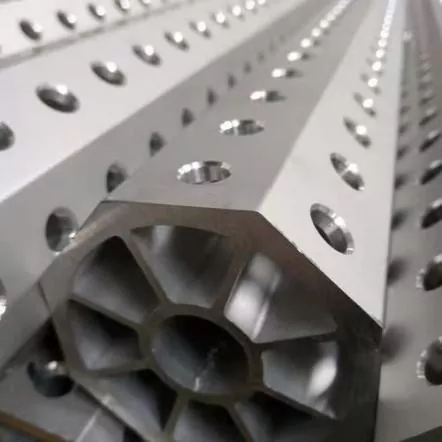
Table of Contents
- 1. What Is Octagonal Steel
- 2. How Octagonal Steel Is Manufactured
- 3. Key Structural Advantages of Octagonal Steel
- 4. Typical Specifications and Material Grades
- 5. Industrial Applications of Octagonal Steel
- 6. How to Choose the Right Octagonal Steel
- 7. Frequently Asked Questions
- 8. Conclusion
Outline
- Introduction to octagonal steel bars
- Manufacturing methods and material composition
- Structural advantages compared with round or square steel
- Technical specifications and mechanical properties
- Applications across engineering industries
- Practical purchasing considerations
- FAQs and practical solutions
1. What Is Octagonal Steel
Octagonal steel refers to a steel bar or rod with an eight-sided cross-section. Unlike round or square bars, its geometry consists of eight flat surfaces that distribute mechanical forces more evenly during use. This structural design provides stronger torque resistance and greater contact surfaces for mechanical assemblies.
These bars are commonly manufactured from carbon steel, alloy steel, or stainless steel depending on the application requirements. Their combination of durability, dimensional accuracy, and structural balance makes them a preferred material for manufacturing mechanical parts, tools, and structural components.
Because of the eight flat sides, octagonal steel can provide stronger grip performance and improved torque transmission in mechanical systems compared with round bars. This characteristic is particularly beneficial in applications involving shafts, connectors, or high-precision components. :contentReference[oaicite:0]{index=0}
2. How Octagonal Steel Is Manufactured
Octagonal steel bars are produced through several advanced metallurgical processes that enhance dimensional accuracy and mechanical strength.
Common production methods include:
- Hot rolling
- Cold drawing
- Cold finishing
- Precision machining
Among these processes, cold drawing is frequently used because it improves strength, surface finish, and dimensional tolerance. The steel is pulled through specially shaped dies to achieve the octagonal profile. This process produces smoother surfaces and higher mechanical strength compared with standard hot-rolled steel bars. :contentReference[oaicite:1]{index=1}
Typical manufacturing steps
| Production Stage | Description |
|---|---|
| Material Preparation | Steel billets are selected according to grade and mechanical requirements. |
| Heating or Cold Processing | The material is shaped through rolling or cold drawing. |
| Profile Forming | Specialized dies create the eight-sided geometry. |
| Straightening and Cutting | Bars are aligned and cut to specified lengths. |
| Surface Treatment | Optional treatments such as polishing, pickling, or coating are applied. |
3. Key Structural Advantages of Octagonal Steel
The distinctive shape of octagonal steel provides several structural and mechanical benefits that solve common challenges in industrial engineering.
1. Improved Torque Transmission
The flat edges increase friction and grip between components, allowing efficient torque transfer in mechanical assemblies such as shafts and couplings.
2. Higher Load Stability
Eight sides distribute stress more evenly, reducing deformation under heavy loads.
3. Precision Fit in Machinery
Octagonal geometry provides accurate alignment in equipment components and fixtures, helping prevent slippage or misalignment.
4. Better Machining Performance
Flat surfaces simplify milling, drilling, and cutting operations during manufacturing.
5. Enhanced Structural Aesthetics
Architectural and design applications benefit from the unique geometric appearance of octagonal steel elements.
In addition, octagonal steel bars maintain high tensile strength and resistance to deformation, making them suitable for demanding environments in machinery and construction industries. :contentReference[oaicite:2]{index=2}
4. Typical Specifications and Material Grades
Octagonal steel is produced in a wide range of sizes and steel grades to match different industrial requirements.
| Parameter | Typical Range |
|---|---|
| Width Across Flats | 9.5 mm – 25 mm or customized |
| Standard Length | 6 m – 6.4 m |
| Material Options | Carbon Steel, Alloy Steel, Stainless Steel |
| Production Method | Cold Drawn / Hot Rolled |
| Standards | ASTM, JIS, DIN, GB |
For example, stainless steel grades such as 302 or 303 provide corrosion resistance and strong mechanical performance, making them suitable for aerospace, automotive, and precision components. :contentReference[oaicite:3]{index=3}
5. Industrial Applications of Octagonal Steel
Octagonal steel bars are widely used across multiple industries due to their durability, structural balance, and versatility.
Major application fields include:
- Automotive manufacturing
- CNC machining and mechanical equipment
- Construction and structural engineering
- Tool manufacturing
- Architectural and decorative structures
In automotive engineering, octagonal steel is often used in suspension components and structural parts because it distributes load effectively and maintains stability during operation. :contentReference[oaicite:4]{index=4}
In machining and manufacturing industries, the shape improves component positioning and ensures precision assembly in high-performance mechanical systems.
6. How to Choose the Right Octagonal Steel
Selecting the correct octagonal steel product is essential for achieving optimal performance and durability. Several technical factors should be evaluated before purchase.
Key selection factors
- Material Grade: Choose carbon steel, alloy steel, or stainless steel depending on corrosion resistance and strength requirements.
- Dimensional Tolerance: Precision applications require tight tolerances.
- Surface Finish: Smooth surfaces improve machining and reduce wear.
- Mechanical Properties: Tensile strength, hardness, and ductility must match the application.
- Manufacturing Method: Cold drawn bars usually provide higher dimensional accuracy.
Working with an experienced manufacturer ensures consistent material quality and reliable production standards.
For businesses requiring reliable supply and customization, Shunchen factory provides professional manufacturing solutions for octagonal steel products with stable mechanical performance and precise dimensional control.
7. Frequently Asked Questions
Q1: What is the main advantage of octagonal steel compared with round steel?
Octagonal steel provides improved torque transmission and stronger grip surfaces because of its flat edges, which reduces slippage in mechanical assemblies.
Q2: Is octagonal steel suitable for high-precision machining?
Yes. Cold-drawn octagonal steel offers tight dimensional tolerances and smooth surfaces, making it ideal for precision parts and CNC machining.
Q3: Can octagonal steel resist corrosion?
When produced from stainless steel or treated with protective coatings, octagonal steel demonstrates excellent corrosion resistance in harsh environments.
Q4: Which industries commonly use octagonal steel bars?
Common industries include automotive manufacturing, construction, machinery production, aerospace components, and tool manufacturing.
8. Conclusion
Octagonal steel combines geometric efficiency with excellent mechanical properties, making it an important material for modern engineering and manufacturing. Its eight-sided structure improves torque transmission, structural stability, and machining precision while maintaining high strength and durability.
Whether used in automotive systems, precision machinery, or structural frameworks, octagonal steel provides a reliable solution for applications requiring both performance and accuracy.
If you are searching for dependable octagonal steel products with consistent quality and customized specifications, Shunchen factory offers professional production capabilities and industry experience. Our team is ready to help you choose the right material for your project requirements.
Contact us today to discuss your project and receive a customized quotation for high-quality octagonal steel solutions.
Related News
- What Are the Common Lengths Available for Steel Channels?
- How Does Hot-Dip Galvanizing Protect Steel Channels?
- What makes Angle Steel the go-to material for industrial plant maintenance?
- Why Is Hot Dip Galvanized Grating Important for Modern Industry?
- What makes Angle Steel the top choice for transmission tower construction?
- Why Is CARBON STEEL STRUCTURAL ANGLE BAR a Smart Choice for Modern Structural Projects
Leave me a message